10 NYC Apartment Red Flags to Know Before You Sign

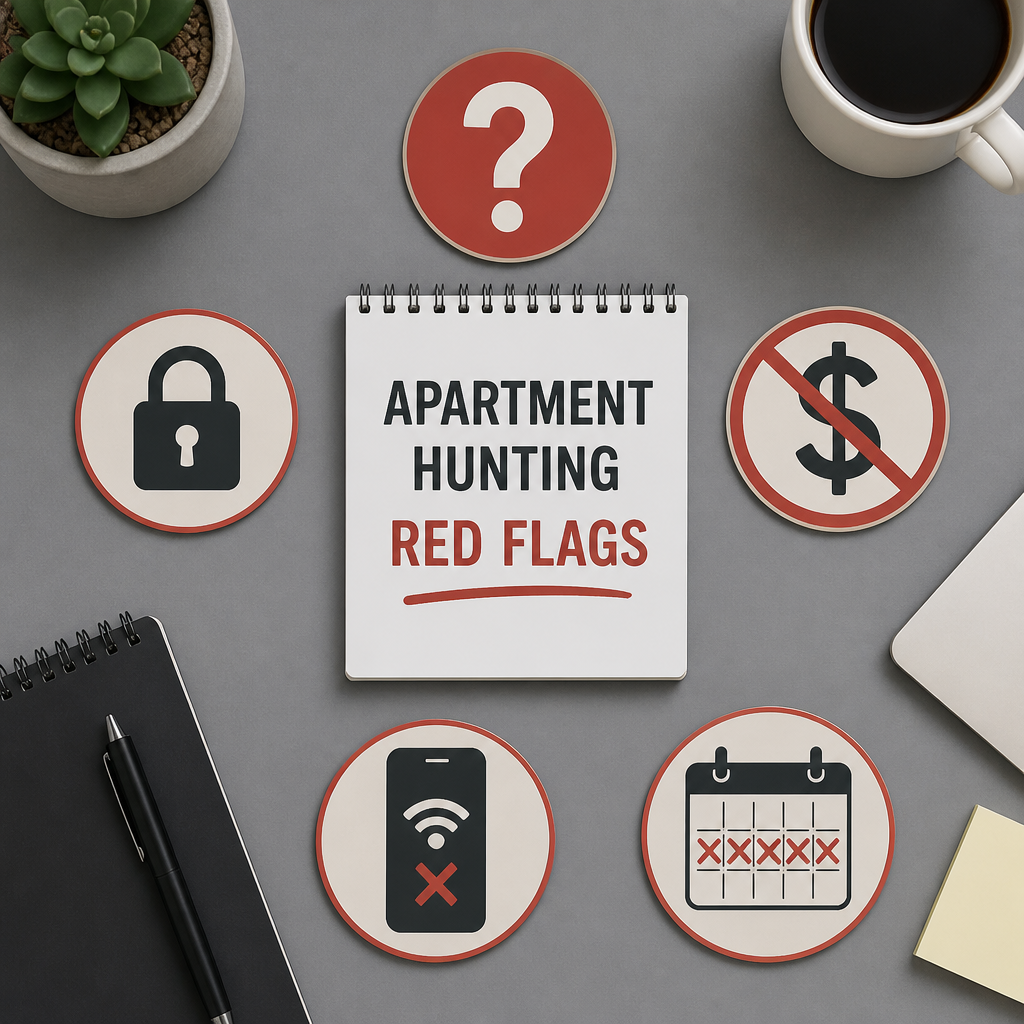
NYC's rental market does not forgive naivety. Thousands of people relocate to New York every year and encounter the same traps: listings that vanish after a deposit, apartments that look nothing like their photos, and landlords who become unreachable the moment the lease is signed. Knowing the most common NYC apartment red flags before you start searching is not optional. It is the difference between finding a home and losing thousands of dollars to a scam or a nightmare building. This guide breaks down exactly what to watch for, with specific details that apply to how this city's rental market actually works.
Table of Contents
- Quick Takeaways
- Red Flag 1: Pricing That Is Far Below Market Rate
- Red Flag 2: Requests for Upfront Payment Before You See the Apartment
- Red Flag 3: Wire Transfer, Zelle, or Cryptocurrency Payment Demands
- Red Flag 4: The Out-of-Town Landlord Who Cannot Show the Unit
- Red Flag 5: Bait-and-Switch Listings
- Red Flag 6: Listings Without an Exact Street Address
- Red Flag 7: A Building With Unresolved HPD Violations
- Red Flag 8: Signs the Apartment Is an Illegal Conversion
- Red Flag 9: Non-Standard or Rights-Waiving Lease Terms
- Red Flag 10: High-Pressure Tactics to Sign Immediately
- How to Respond to These Red Flags
- Frequently Asked Questions
- References
Quick Takeaways
| Key Insight | Explanation |
|---|---|
| Pricing 25%+ below comparable listings signals a scam | Scammers use unrealistically low rents to generate urgency. Always compare against current StreetEasy medians for the specific neighborhood and unit size. |
| Never send money before seeing the apartment in person | No legitimate NYC landlord, broker, or management company requires a deposit before an in-person showing. No exceptions. |
| Wire transfers and crypto payments are non-recoverable | Legitimate NYC landlords accept checks or payments through licensed brokers. Any request for wire transfer, Zelle, or cryptocurrency is a definitive scam signal. |
| HPD violation records are public and free to check | NYC's Housing Preservation and Development maintains a searchable database of all building violations. Class B and Class C violations indicate serious neglect. |
| Security deposits over one month's rent are illegal in NYC | Under the 2019 Housing Stability and Tenant Protection Act, landlords cannot legally charge more than one month's rent as a security deposit. |
| Listings without exact addresses are a deliberate tactic | Scammers omit street addresses to prevent you from cross-referencing the listing against public records before they collect your information or money. |
| Basement apartments without proper egress are often illegal | Cellar and basement conversions without proper egress windows and ceiling height are frequently illegal in NYC and offer no tenant protections if the city vacates the building. |
Red Flag 1: Pricing That Is Far Below Market Rate
The single most reliable indicator of a fraudulent listing is a price that makes no economic sense for its neighborhood. Scammers set artificially low rents because they are not actually renting an apartment. They are collecting deposits from multiple victims before disappearing. If you are looking at a one-bedroom in a neighborhood like Williamsburg or the Upper West Side and the rent is dramatically below what comparable units show on StreetEasy, treat it as a scam until proven otherwise.
The practical rule: any listing priced more than 20-25% below comparable units in the same area deserves immediate scrutiny. Do not rationalize it as "a great deal" or "a motivated landlord." In a market as competitive and data-transparent as New York, genuine bargains exist but they do not look like bargains. They get rented before most people even see them.
Out-of-state movers are especially vulnerable here because they lack a calibrated sense of what rent should actually cost in each specific neighborhood. A price that sounds generous compared to where you are moving from may still be a scam relative to NYC market rates. Build your baseline knowledge of neighborhood pricing before you start touring.
Pro tip: Before viewing any apartment, search the building's address on StreetEasy or a comparable platform to see current and recent listings in the same building. If the prices do not match what you were quoted, walk away.
Red Flag 2: Requests for Upfront Payment Before You See the Apartment
This is the mechanism behind the most common NYC rental scam. A scammer posts a listing, creates a false sense of urgency by claiming high demand, and then asks for a security deposit or "holding fee" before you have ever set foot in the unit. Once the money is sent, the scammer stops responding. The apartment either does not exist or belongs to someone else entirely.
No reputable agent, broker, or landlord in NYC will require any payment before showing you the apartment. In fact, requiring upfront payment just to arrange a showing is illegal for licensed brokers under New York real estate law. If you encounter this, report it and move on. There is no version of this scenario where paying sight-unseen ends well.
This pressure is especially dangerous for relocating professionals and out-of-state movers who are apartment hunting remotely and feel pressured to secure something before their move date. The fear of losing a unit to another applicant is real in NYC, but it is also exactly the emotion scammers manipulate. A legitimate listing will still be there after you confirm it is real.
Red Flag 3: Wire Transfer, Zelle, or Cryptocurrency Payment Demands
Even if you have seen the apartment and it appears legitimate, the payment method matters enormously. Legitimate NYC landlords and licensed management companies accept personal checks, cashier's checks, or payments processed through a licensed broker. Any landlord insisting on payment via wire transfer, Zelle, Venmo, or cryptocurrency is operating outside normal practice, and almost certainly fraudulently.
The reason scammers demand these methods is simple: the transfers are essentially untraceable and unrecoverable once completed. Unlike a check, which can be stopped or disputed, a wire transfer sent to a fraudulent account is gone. NYC renters lose substantial amounts annually to exactly this kind of scheme, and out-of-town movers are disproportionately targeted because they are more likely to be handling transactions without the ability to meet in person first.
The golden rule of NYC apartment hunting: never send money for an apartment you have not physically visited. Not for holding fees, not for application fees, not because the landlord claims to be out of town. If payment is demanded before viewing, it is a scam.
Pro tip: If you are relocating from out of state and cannot visit in person before your move date, work with a licensed NYC relocation specialist who can physically verify and tour apartments on your behalf. This is not a luxury. It is basic protection against a market that is heavily exploited by fraudsters targeting remote renters.
Red Flag 4: The Out-of-Town Landlord Who Cannot Show the Unit
This scam follows a predictable script. The "landlord" claims to be traveling, working abroad, or otherwise unavailable, but promises to mail you the keys once you send a deposit. They often provide convincing backstories about missionary work, military deployment, or business travel. The listings they post frequently feature beautiful photos of real apartments lifted from other websites.
The operational tell is simple: any landlord who cannot arrange for someone to show you the apartment is a red flag. Real landlords in NYC have superintendents, property managers, or broker representatives who can conduct showings. Buildings do not run without on-site staff. If a "landlord" keeps making excuses about why in-person viewings are impossible, the apartment does not exist in the way it is being represented.
Cross-reference the listing photos using reverse image search tools. Scammers frequently steal photos from legitimate listings on platforms like StreetEasy, Zillow, or real estate agency websites. If the same images appear under a different address or asking price elsewhere, you are looking at a fabricated listing.
Red Flag 5: Bait-and-Switch Listings
The bait-and-switch is one of the oldest tricks in NYC real estate and it operates across both the scam and the legitimate-but-unethical ends of the market. At its most fraudulent, photos of a desirable apartment are used to get you through the door, after which you are told the featured unit is "no longer available" but another, inferior unit is ready for immediate lease. At its more subtle end, the photos simply do not represent the actual unit in terms of size, layout, light, or condition.
Visiting the actual listed unit, not just any unit in the building, is the only protection against this tactic. Ask specifically to see the unit number referenced in the listing. If that unit is unavailable for showing with no credible explanation, the listing is misleading. Also compare the apartment in person with the photos: are the dimensions consistent? Does the light match? Is the finish quality the same?
Out-of-state movers who rely heavily on virtual tours are particularly exposed to this red flag. Virtual tours are a useful screening tool, but they should never be the basis for signing a lease without an in-person confirmation, whether by you or a trusted representative who is physically on the ground in New York.
Red Flag 6: Listings Without an Exact Street Address
Legitimate NYC rental listings include a precise street address. Scammers frequently omit this information intentionally because an exact address allows prospective renters to cross-reference the listing against public records, check the building's violation history, verify ownership, and confirm that the unit actually exists in the advertised building.
When you have an address, you can look it up on HPD Online, the NYC Department of Buildings (DOB) portal, and ACRIS (the city's property records database) to verify ownership and see whether the building is registered. You can also use Google Street View to confirm that the building's description matches the listing. An address-free listing denies you all of these verification tools.
Some platforms allow landlords to post approximate locations or neighborhood-level markers. This is not a universal scam signal on its own, since some landlords prefer privacy during early listing stages. But any listing that actively resists providing an exact address when asked directly, especially combined with other pressure tactics, should be declined.
Red Flag 7: A Building With Unresolved HPD Violations
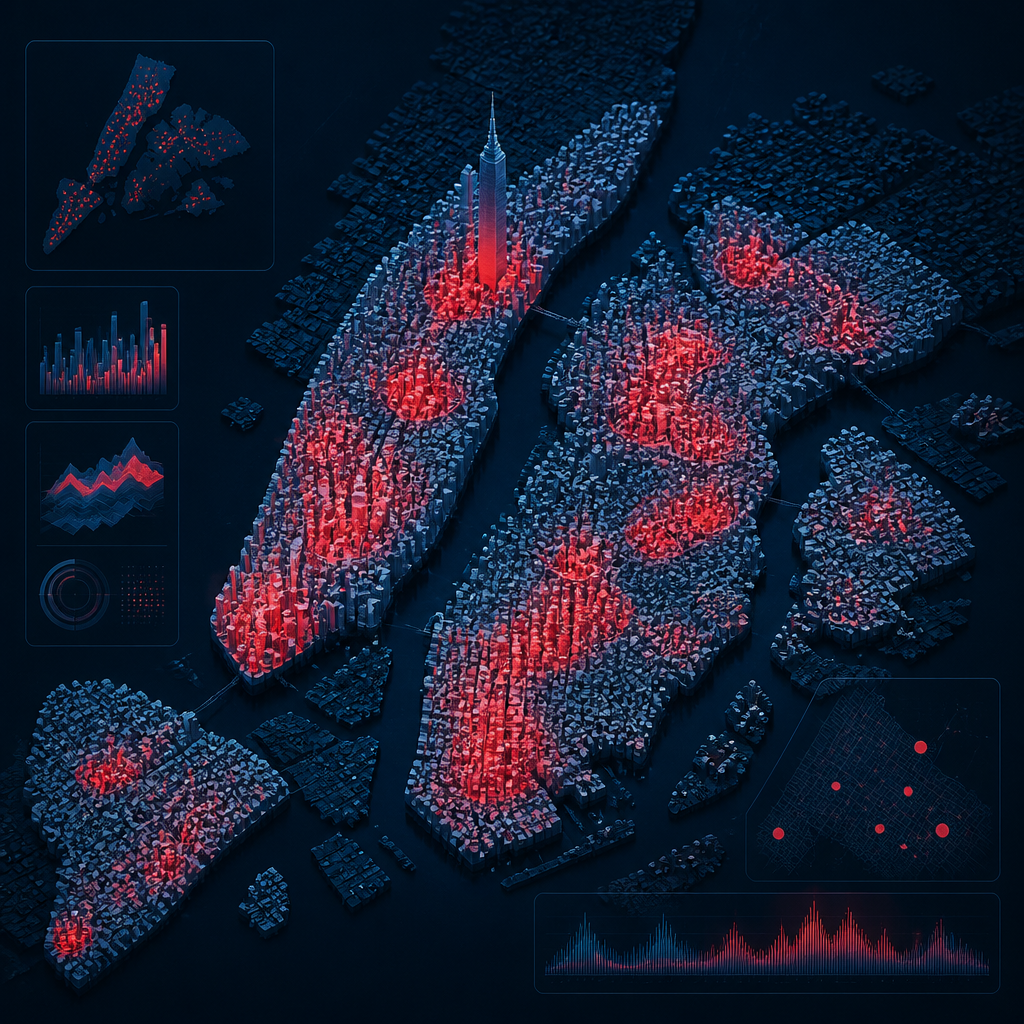
This red flag lives in a different category from scams. The building is real, the landlord is reachable, and the lease is legitimate. But the apartment is connected to a landlord who does not maintain their properties, and you will discover this the hard way after moving in. New York City's Housing Preservation and Development (HPD) maintains public records of all building violations, and checking them before signing is non-negotiable.
HPD violations fall into three classes. Class A violations are non-hazardous maintenance issues. Class B violations are hazardous conditions, such as rodent infestations, inadequate heat or hot water, and significant structural issues. Class C violations are immediately hazardous, including lack of heat, severe mold, and unsafe electrical wiring. Landlords have legally mandated repair timelines for each class, and unresolved Class B and C violations in a building you are considering should prompt serious concern.
You can check HPD violation history at no cost through the city's official portal. You can also review 311 complaint histories tied to a specific address, which reveal patterns of tenant complaints that may not have resulted in formal violations but reflect the real experience of living there. A building with a long history of recurring violations across multiple units is telling you something about how ownership operates.
Pro tip: Do not just check the specific unit. Check the entire building. A landlord who maintains some units and neglects others is still a landlord you will have to deal with when something breaks in your apartment.
Red Flag 8: Signs the Apartment Is an Illegal Conversion
New York City has strict standards for what constitutes a legal, habitable residential unit. Basement and cellar apartments are among the most frequently illegally converted spaces, and they appear regularly in rental listings, sometimes even on mainstream platforms. The risks are significant: tenants in illegal units have limited legal protections, and the city can require you to vacate with little notice if the unit is cited.
The physical indicators of an illegal conversion include ceilings that feel too low, windows that are at or below ground level without proper egress dimensions, a lack of natural light that exceeds what you would expect even from a ground-floor unit, no separate entrance from other residential units, and evidence of improvised plumbing or electrical work. In subdivided apartments, watch for bedrooms that lack any window or share a wall with a kitchen or bathroom in unusual configurations.
A building's Certificate of Occupancy (CO), which you can verify through the NYC Department of Buildings DOB NOW portal, specifies what the building is legally permitted to be used for and how many residential units it can contain. If the unit you are being shown does not match the CO for that building, you are looking at an illegal conversion.
Red Flag 9: Non-Standard or Rights-Waiving Lease Terms
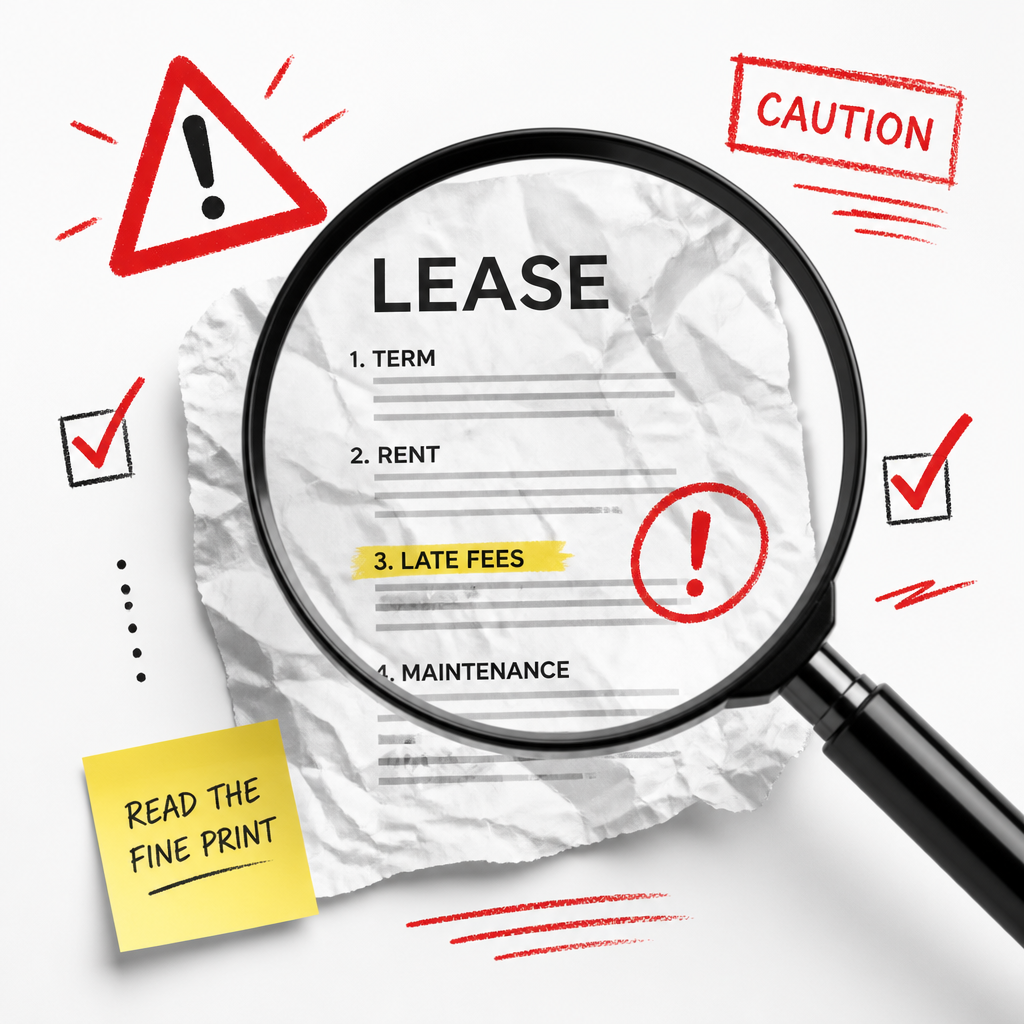
New York State has a standard residential lease form, and most reputable landlords and management companies use it as the basis for their agreements. When you encounter a lease that looks heavily modified, unusually brief, or filled with clauses that seem to strip away your tenant rights, that is a signal worth paying close attention to.
Specific things to watch for include: clauses that waive your right to a return of your security deposit within the legally mandated timeframe, provisions that allow the landlord to enter the unit without proper notice, unusual penalties for issues that would normally be the landlord's responsibility, and any language around rent stabilization status that is vague or evasive. If the landlord is unwilling to discuss rent stabilization status or lease renewal rights, that evasiveness itself is a red flag.
Also watch for security deposit demands that exceed one month's rent. Under the 2019 Housing Stability and Tenant Protection Act (HSTPA), landlords in New York cannot charge more than one month's rent as a security deposit. Any demand for two months' security, a "last month's rent" deposit, or any combination that totals more than one month's rent is illegal. Similarly, application fees above $20 are not permitted under current NYC law.
Red Flag 10: High-Pressure Tactics to Sign Immediately
Urgency is a tool. In NYC's competitive rental market, genuine competition for desirable apartments is real, and good listings do move quickly. But there is a difference between a landlord noting that multiple applications are under review and a landlord or broker who is manufacturing panic to stop you from thinking clearly or doing due diligence.
Watch for phrases like "I need an answer today," "there are three other people viewing this afternoon," or "you need to put down a deposit right now to hold it." These are pressure tactics designed to short-circuit your judgment. Legitimate landlords with genuinely competitive listings will still wait long enough for you to review a lease before signing. They will not require you to commit before you have seen all the paperwork.
This pressure is especially effective on out-of-state movers who are operating under a hard deadline and feel that they cannot afford to lose a unit. Recognizing this vulnerability in yourself is part of navigating the market successfully. Any situation that requires you to bypass normal review steps is a situation you should exit, regardless of how much you want the apartment.
How to Respond to These Red Flags
The right response to a red flag depends on whether you are dealing with an outright scam or a legitimate-but-problematic landlord. The table below summarizes the key differences and what to do in each case.
| Red Flag Type | Most Likely Scenario | Recommended Action |
|---|---|---|
| Price far below market, no address, wire transfer demand | Active rental scam | Stop all contact immediately. Report to the platform and to the NYC DCWP or NYPD. Never send money. |
| Out-of-town landlord, refusal to show unit in person | Active scam or at minimum unverifiable listing | Require an in-person showing through a verified representative before any further engagement. Walk away if refused. |
| Serious unresolved HPD violations (Class B or C) | Negligent but potentially real landlord | Ask the landlord directly for a remediation timeline in writing. If no credible answer, decline the apartment. Cross-reference other buildings owned by the same landlord. |
| Non-standard lease terms, rights-waiving clauses | Landlord attempting to circumvent tenant protections | Have a NYC tenant's rights attorney or experienced relocation advisor review the lease before signing. Never sign a lease you do not fully understand. |
| High-pressure urgency, bait-and-switch on unit shown | Unethical broker or landlord, not necessarily fraudulent | Slow down deliberately. Insist on seeing the specific listed unit. If the urgency does not let up, treat this as a sign of how the landlord relationship will operate long-term. |
One consistent principle across all of these scenarios: documentation protects you. Get everything in writing, keep records of all communication, and never rely on verbal commitments in NYC real estate. What is not in the lease does not exist.
Frequently Asked Questions
How do I check if an NYC apartment listing is legitimate before touring?
Start by verifying the address exists and matches the listing description using Google Street View. Then check the building's HPD violation history and 311 complaint records through the city's public portals. Run the listed photos through a reverse image search to confirm they have not been taken from another listing. If the listing has no exact street address or the price is significantly below comparable units in the neighborhood, treat it as suspect until you can confirm otherwise through independent research.
Is it legal for a NYC landlord to ask for more than one month's security deposit?
No. Under New York's 2019 Housing Stability and Tenant Protection Act, landlords cannot collect more than one month's rent as a security deposit. Any request for two months' security, a "last month's rent" deposit in addition to a security deposit, or any combination that totals more than one month's rent violates current law. If a landlord demands this, you can report it to the New York State Attorney General's office or the NYC Department of Housing Preservation and Development.
What NYC resources can I use to check a building's violation history?
The NYC Housing Preservation and Development (HPD) online portal provides a free, searchable database of all building violations by address. The NYC Department of Buildings (DOB) DOB NOW portal covers structural and construction violations. The city's 311 portal shows complaint histories tied to specific addresses. ACRIS, the city's property records database, lets you verify building ownership and confirm you are dealing with the actual owner or authorized representative.
What should I do if I have already sent money and suspect it was a scam?
Contact your bank immediately to attempt a reversal, which is most effective within the first 24 hours for wire transfers and has varying success rates for Zelle or Venmo. File a report with the NYPD, the FBI's Internet Crime Complaint Center (IC3), and the FTC at reportfraud.ftc.gov. Also report the listing to the platform where you found it. Recovery of funds sent via wire transfer or cryptocurrency is difficult, but filing official reports creates a record that can support legal action and helps protect other renters from the same scam.
How do I know if a basement apartment in NYC is legal?
Request the building's Certificate of Occupancy through the NYC Department of Buildings DOB NOW portal and verify that residential use of the basement level is permitted. Legal basement apartments in NYC must meet minimum ceiling height requirements, have adequate natural light, and have proper egress windows. If the landlord cannot produce documentation confirming the unit's legal status, or if the unit clearly does not meet basic habitable standards, do not sign a lease. Tenants in illegal units can be displaced by the city without the standard tenant protections that apply to legal apartments.
Can a relocation service help me avoid these red flags?
A specialized NYC relocation service with deep local expertise can significantly reduce your exposure to both scams and problematic landlords. An experienced relocation advisor has vetted landlord relationships, access to listings that never appear on public platforms, and the contextual knowledge to identify a below-market listing that is suspicious versus one that is legitimately priced. For out-of-state movers who cannot physically be in New York during the search process, working with a licensed specialist who can tour and verify apartments in person is one of the most practical protections available.
Have you encountered any of these red flags during your own NYC apartment search? Share your experience in the comments, as your story could help someone else avoid the same situation.
References
- Brick Underground: Common NYC rental scams and how to spot fake listings and fraudulent brokers
- StreetEasy: How to verify NYC apartment listings and avoid rental fraud
- DwellCheck: Comprehensive guide to NYC apartment red flags including HPD violations and illegal conversions
- Documented NY: How to avoid upfront payment scams and fake landlord tactics in NYC
- Loftey: Identifying and avoiding scams when searching for NYC apartment rentals

Book your free
relocation inquiry
In 20 minutes, we'll understand your needs and create a personalized plan for your NYC move. No commitment, no pressure — just expert guidance.
+1 (917) 450-8909
Free 20-minute call
All 5 NYC Boroughs
Ready to make your
NYC move happen?
In 20 minutes, we'll understand your needs and create a personalized plan for your NYC move. No commitment, no pressure — just expert guidance.
.avif)