Relocating to NYC for Work: Align Your Move Timeline

You accepted the offer. You gave notice at your current job. And now you have somewhere between four and eight weeks to find an apartment in one of the most competitive rental markets on the planet before your start date arrives. Relocating to NYC for work is not just a logistical challenge. It is a timed event, and the clock is running from the moment you sign that offer letter. Most out-of-state professionals underestimate how little margin for error the NYC rental market allows. This guide gives you a realistic, week-by-week framework to land an apartment without blowing your start date or your budget.
Table of Contents
- Quick Takeaways
- Why NYC Relocation Timelines Break Down
- The Realistic NYC Move Timeline for Professionals
- Qualifying for an NYC Apartment as a New Hire
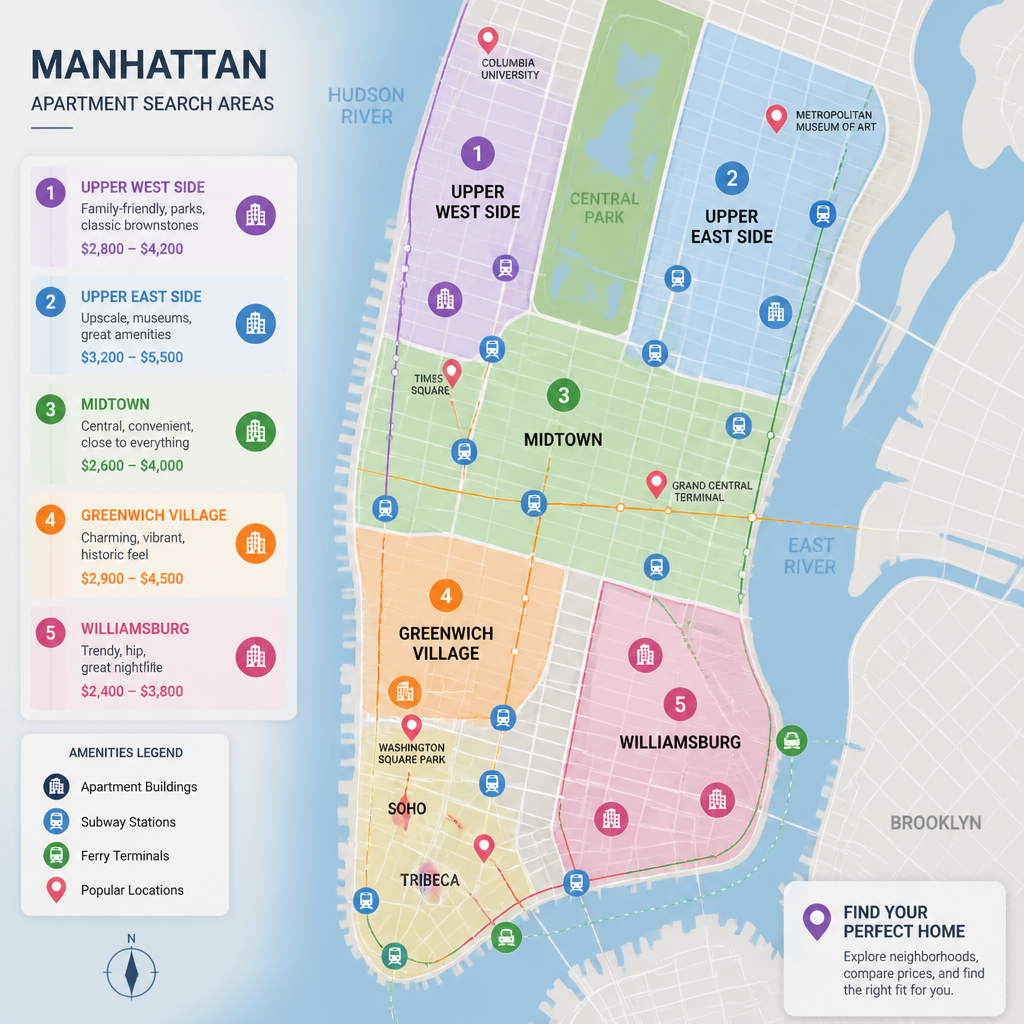
- Choosing the Right Neighborhood Before You Search
- Temporary Housing: Your Buffer Strategy
- Comparing Your Search Approach Options
- Frequently Asked Questions
- References
Quick Takeaways
| Key Insight | Explanation |
|---|---|
| Start your search 30 to 60 days before your target move-in date | Most NYC apartments are listed and leased within this window. Searching earlier often wastes time since the units you see will be gone by the time you are ready to move. |
| The 40x rent rule is a hard filter, not a suggestion | Most NYC landlords require your annual gross income to be at least 40 times the monthly rent. As a new hire, your offer letter becomes your most important document. |
| Apartments move in 36 to 60 days on average in Manhattan, faster in hot months | The NYC rental market is seasonal. Summer and early fall listings disappear fastest. Build this into your offer timing and flexibility. |
| Plan for a temporary housing buffer of at least two to four weeks | Arriving in NYC without a lease is common and manageable. Short-term furnished rentals let you search in person without the pressure of a ticking hotel bill. |
| Your offer letter and employment contract replace a pay stub | As a new hire with no NYC pay history, landlords will accept a signed offer letter showing salary. Have it on hand in printed and digital form before you apply. |
| Off-market listings matter more than Zillow or StreetEasy for competitive units | Some of the best apartments in desirable neighborhoods never appear on public platforms. Insider access to these units requires relationships with local brokers and property managers. |
| Application fees are capped at $20 under current NYC law | Under the FARE Act, renters only pay a broker fee if they explicitly hire a broker. Upfront costs are limited to first month's rent plus one month's security deposit. |
Why NYC Relocation Timelines Break Down
The single most common mistake made by professionals moving to NYC for a new job is treating the apartment search like a normal apartment search. It is not. In other cities, you might casually browse listings for a month before deciding. In NYC, that approach costs you every apartment you actually want.
The core problem is a mismatch between search window and listing availability. The NYC rental market operates on a short cycle. Most apartments in Manhattan and the outer boroughs are listed and leased within 30 to 60 days, and during peak rental season from May through September, competitive units in sought-after neighborhoods disappear in days, sometimes hours. Starting your search too early means you are looking at apartments that will be gone long before your move-in date. Starting too late means scrambling.
There is also the documentation problem. Out-of-state applicants applying as new hires carry a different financial profile than established NYC renters. You have no local credit history with landlords, no recent pay stubs from your new employer, and potentially a gap in employment between your old job and your start date. Every one of these factors can slow down or kill an application at a critical moment.
The NYC rental market does not wait for you to feel ready. Your move-in date and your application documents need to be prepared before you start looking, not after you fall in love with an apartment.
Finally, there is the geography problem. Out-of-state movers often search without a clear neighborhood target, bouncing between listings in Brooklyn, Queens, and Manhattan without a coherent commute or budget strategy. This scattershot approach wastes the limited time you have in what is already a compressed search window.

The Realistic NYC Move Timeline for Professionals
Here is what a well-executed relocation timeline actually looks like when you are moving to NYC for a new job. Adjust the exact weeks based on how much notice you receive before your start date, but the structure holds in most scenarios.
Eight to Ten Weeks Before Your Start Date
This is your preparation phase, not your search phase. Use this window to set your budget, define your neighborhood priorities, and assemble your application documents. Collect your offer letter or employment contract, your last two years of tax returns, recent bank statements showing savings, and your credit report. Landlords in NYC move fast once they decide on a tenant, and you need to be ready to apply the same day you view an apartment.
Also decide at this stage whether you are arriving with or without a lease already signed. Both are valid strategies, but they require different preparations. Arriving without a lease means arranging temporary housing. Arriving with a lease means your search window must be compressed into the six to eight weeks before your move-in date.
Six to Eight Weeks Before Your Start Date
This is the window to open your active search. Thirty to sixty days before your intended move-in date is the standard recommendation for NYC apartment hunting, and it aligns with how listings cycle in and out of availability. At this stage, start attending viewings, shortlisting neighborhoods, and contacting brokers or relocation specialists who have access to listings that do not appear on public platforms.
If you are searching remotely from out of state, prioritize a dedicated trip to NYC for in-person viewings. Virtual tours are useful for narrowing your list, but signing a lease on an apartment you have never physically visited is a risk that catches many out-of-state movers off guard. Light exposure, noise levels, building quality, and block character are all things you cannot assess from a screen.
Two to Four Weeks Before Your Start Date
By this point, you should have a signed lease or be in final negotiations on one. If you have not secured an apartment, activate your temporary housing plan immediately rather than accepting the first available unit out of panic. Rushing a lease in the final week before your start date under pressure often produces expensive mistakes: wrong neighborhoods, apartments with undisclosed issues, or landlords who are slow to complete repairs before move-in.
Pro tip: Once you receive your offer letter, send a PDF copy to yourself in a cloud storage folder along with your other application documents. NYC landlords frequently require same-day application submission, and being able to email documents within minutes of a viewing can be the difference between getting an apartment and losing it to someone who was more prepared.
Qualifying for an NYC Apartment as a New Hire
NYC landlord qualification standards are stricter than in most other American cities, and out-of-state new hires face a specific set of friction points that established local renters do not encounter.
The 40x Rent Rule and What It Means for You
The most important number in NYC rental applications is 40. The 40x rent rule requires that your annual gross income be at least 40 times the monthly rent on the apartment you are applying for. A $3,000 per month apartment requires $120,000 in annual income. This is a screening guideline used by most NYC landlords, not a legal mandate, but departing from it requires either a guarantor or additional financial documentation.
As a new hire, your offer letter or signed employment contract is your proof of income. Most landlords accept this in lieu of pay stubs if the letter is on company letterhead and clearly states your annual salary or hourly rate and expected start date. Have your HR department issue a formal offer letter with this information if your original offer was verbal or sent by email in an informal format.
When You Need a Guarantor
If your salary does not meet the 40x threshold for the apartments you are targeting, you have a few options. A personal guarantor, typically a parent or family member with income that meets the threshold, can co-sign your lease. Some landlords use an institutional guarantor service instead, which charges a fee to guarantee the lease on your behalf. Some landlords may also accept a larger upfront security deposit in exchange for relaxing the income requirement. Know which option applies before you start viewing apartments, because this conversation needs to happen during the application process, not after an offer is made.
Pro tip: Under current NYC law, upfront move-in costs are capped at first month's rent plus one month's security deposit, and application fees are capped at $20. Do not pay more than this to any landlord or management company. If someone asks for a larger upfront payment as a workaround, that is a red flag worth investigating before you sign anything.

Choosing the Right Neighborhood Before You Search
Neighborhood selection is where most remote job relocations either gain efficiency or lose weeks of time. If you enter your search with a shortlist of two or three target neighborhoods based on your commute, budget, and lifestyle priorities, you search faster and make better decisions. If you enter the search with a vague "somewhere in Brooklyn or Manhattan" mindset, you will spend most of your time being confused rather than deciding.
Commute Time as the Primary Filter
Your office location should be the first filter applied to your neighborhood search. NYC's subway system is extensive but not uniform. A 30-minute commute from one neighborhood can stretch to 50 minutes from a neighboring area depending on which subway lines serve it and how frequently they run. Before you fall in love with a listing in a specific neighborhood, run the commute from that address to your office on the MTA trip planner during your actual working hours, not during off-peak times.
In practice, professionals working in Midtown Manhattan have strong commuter access from neighborhoods across Brooklyn, Queens, and the Upper West and Upper East Sides of Manhattan. Those working in the Financial District or Lower Manhattan find faster commutes from neighborhoods in downtown Brooklyn, Cobble Hill, Carroll Gardens, and the areas served by the 4 and 5 express lines. Those with jobs in Long Island City or other Queens employment hubs often find the fastest commutes from neighborhoods within Queens itself.
Budget Alignment by Borough
There is a significant rent spread across NYC's five boroughs, and making a smart borough choice based on your post-tax salary under the 40x rule can expand or contract your options dramatically. Manhattan commands the highest rents. Brooklyn, particularly in neighborhoods like Park Slope, Williamsburg, and DUMBO, commands mid-to-high rents but often offers more space per dollar than comparable Manhattan neighborhoods. The Bronx, Staten Island, and outer Queens neighborhoods offer the most space per dollar but require longer commute planning depending on your office location.
Do not commit to a neighborhood based on what a colleague recommends without verifying that the commute and pricing work for your specific situation. NYC is local to a degree that makes general advice unreliable. A recommendation that works perfectly for someone in a different role, company, or income bracket may not work for you at all.
Temporary Housing: Your Buffer Strategy
Arriving in New York City without a permanent apartment is not a failure of planning. For many relocating professionals, it is the smartest approach. It removes the pressure of signing a lease remotely sight-unseen, gives you time to properly evaluate neighborhoods in person, and lets you search with a clear head rather than with a deadline forcing your hand.
How Long You Actually Need in Temporary Housing
A realistic temporary housing stay for a relocating professional conducting an active apartment search is two to four weeks. This assumes you have already done your research, defined your target neighborhoods, and assembled your application documents before arriving. If you arrive in NYC without any of that groundwork done, add another week or two.
The most functional temporary housing options for professional relocators are furnished monthly rentals and corporate housing providers. These give you a kitchen, a dedicated workspace, and a stable address to use on applications, which matters more than most people realize. Short-stay hotel rooms and weekly rentals are more expensive per night but offer maximum flexibility if your search timeline is uncertain.
Using Temporary Housing to Your Advantage
Being physically present in NYC during your search is an enormous advantage over remote searching. You can attend viewings on short notice, revisit neighborhoods at different times of day to assess noise and character, and build relationships with brokers who take in-person candidates more seriously than remote applicants. The best apartments in competitive neighborhoods are often shown and leased within 24 to 48 hours of listing. A remote applicant cannot move that fast.
Plan your temporary housing location thoughtfully. Staying in or near your target neighborhood while you search lets you evaluate it as a resident, not a visitor. Staying in a neutral location like Midtown Manhattan gives you fast access to viewings across multiple boroughs while you finalize your neighborhood decision.
Comparing Your Search Approach Options
Relocating professionals in NYC have three primary approaches to their apartment search. Each has genuine strengths and real limitations, and the right choice depends on your timeline, budget, and familiarity with the city.
| Search Approach | Best For | Key Limitations |
|---|---|---|
| Self-directed search via StreetEasy, Zillow, or Apartments.com | Professionals who already know NYC well, have flexible timelines, and have time to manage their own search | Misses off-market listings. Competitive units require very fast action. No guidance on application process, neighborhood fit, or negotiation. |
| Independent NYC real estate broker | Professionals who want professional help and have time to vet and interview brokers | Broker quality and neighborhood knowledge vary significantly. Some brokers focus on sales rather than rentals. Broker fee may apply depending on who is hired. |
| Specialized NYC relocation service (such as RelocateNYC) | Out-of-state professionals and families with compressed timelines, no local knowledge, and a need for end-to-end support from neighborhood matching through lease signing | Best suited for those who want a guided, efficient process rather than a fully hands-on DIY search. Requires a free consultation to confirm fit. |
The self-directed approach works if you have the time, energy, and existing NYC knowledge to execute it well. A common mistake is underestimating how much time a proper NYC apartment search requires when done alone, especially when you are simultaneously managing a new job transition, a household move from another state, and the administrative demands of changing your address, utilities, and financial accounts across multiple platforms.
Specialized relocation services carry a distinct advantage for out-of-state movers because they combine neighborhood expertise with access to listings that never appear on public platforms. RelocateNYC, for example, has spent over 12 years building the kind of relationships with property managers and building owners that produce off-market opportunities, which are often the fastest path to a quality apartment in a competitive neighborhood. For a professional relocating under deadline pressure, that access matters more than the ability to scroll StreetEasy on your own.
Frequently Asked Questions
How far in advance should I start looking for an apartment in NYC when relocating for work?
The practical window is 30 to 60 days before your intended move-in date. Starting earlier than 60 days out means you are browsing apartments that will no longer be available when you are ready to move. Starting later than 30 days compresses your search dangerously, especially if you are searching from out of state and need to schedule a trip for in-person viewings.
Can I use my offer letter instead of pay stubs when applying for a NYC apartment?
Yes. Most NYC landlords accept a signed offer letter on company letterhead in lieu of pay stubs for new hires relocating for work. The letter should clearly state your annual salary, your position, and your start date. Ask your HR department to issue a formal version if your original offer was informal or sent by email. Some landlords may also request bank statements showing sufficient savings as supplemental documentation.
What is the 40x rent rule and how does it affect my apartment search?
The 40x rent rule is the most common income screening guideline used by NYC landlords. It means your annual gross income should be at least 40 times the monthly rent of the apartment you are applying for. A $3,500 per month apartment requires $140,000 in annual gross income to meet this threshold. If your salary falls short, you will need a guarantor, an institutional guarantor service, or to target apartments with lower monthly rent.
Is it better to secure an apartment before my start date or arrive first and search in person?
Both strategies work, but for different profiles. Arriving with a lease signed in advance is only advisable if you had the chance to visit NYC and view apartments in person first. Signing a lease remotely on an apartment you have never seen carries real risk, including misrepresented conditions, overstated space, and neighborhood mismatches. Arriving in NYC with temporary housing arranged and conducting your search in person typically produces better results, especially for professionals unfamiliar with the city's neighborhoods.
How much should I budget for upfront costs when renting an NYC apartment?
Under current NYC law, landlords can require no more than first month's rent plus one month's security deposit as upfront move-in costs. Application fees are capped at $20. Under the FARE Act, you only pay a broker fee if you explicitly hired that broker yourself. Budget for moving costs separately, which can range significantly depending on the distance of your move, the time of year, and the size of your household.
What are the biggest mistakes out-of-state professionals make when moving to NYC for a new job?
The most common mistakes are: starting the apartment search too early or too late relative to the move-in window, searching without a defined neighborhood strategy, arriving without application documents prepared in advance, underestimating how fast apartments move in competitive neighborhoods, and signing leases remotely without an in-person visit. Each of these is avoidable with preparation, and each one alone is enough to cost you weeks and money.
If you are planning a move to New York City for a new job, we would love to hear how you approached your apartment search timeline. What worked, what did not, and what do you wish you had known before you started?
References
- NYC apartment search timing guide: when to start looking for apartments before your move
- What you need to rent an apartment in NYC: documents, fees, and application requirements
- NYC 40x rent rule explained: income requirements for renting in New York City
- NYC residential rental market report: days on market and vacancy rates in Manhattan
- How to plan your apartment search timeline around your move-in date

Book your free
relocation inquiry
In 20 minutes, we'll understand your needs and create a personalized plan for your NYC move. No commitment, no pressure — just expert guidance.
+1 (917) 450-8909
Free 20-minute call
All 5 NYC Boroughs
Ready to make your
NYC move happen?
In 20 minutes, we'll understand your needs and create a personalized plan for your NYC move. No commitment, no pressure — just expert guidance.
.avif)