Furnished vs Unfurnished NYC Apartments on a Virtual Tour

Searching for furnished apartments NYC virtual tour listings sounds simple until you notice that "furnished" can describe a studio with one chair or a one-bedroom with a full dining set. Renters moving from out of state or overseas often book a live video walkthrough because they cannot visit before signing. That instinct is right, but the screen hides a lot. A camera can't show you whether the sofa folds out, whether the dishwasher runs, or whether the closet is deep enough for hanging clothes. This guide covers what to demand on the call for both furnished and unfurnished apartments, so you know what you're committing to before you pay a deposit.
Table of Contents
- Quick Takeaways
- What "Furnished" Actually Means in NYC
- What an Unfurnished Listing Leaves to You
- Running a Furnished Tour Over Video
- Running an Unfurnished Tour Over Video
- Comparing Furnished, Unfurnished, and Partly Furnished Units
- Mistakes That Cost Renters on Video Tours
- Frequently Asked Questions
- References
Quick Takeaways
| Key Insight | Explanation |
|---|---|
| A furnished label is only a list | Ask for the written inventory and compare it against the walkthrough. If an item is not on the list, assume it is missing until the agent shows it to you on camera. |
| Insist on a live walkthrough | Pre-recorded clips skip corners and angles. Request a live video call where you direct the camera to the closets, the kitchen cabinets, and the window side of the bedroom. |
| Unfurnished means you fund the gap | Price your sofa, bed, dresser, and window coverings before you sign. Delivery, assembly, and removal are part of the real cost. |
| Count outlets from the tour | Ask the agent to point the camera at every outlet in the living room and bedroom. Too few outlets means extension cords for your desk, lamp, and television. |
| Measure with a known object | If the agent won't take measurements, ask for a photo of a wall next to a standard door or a sheet of paper so you can estimate the width yourself. |
| Get utilities and internet in writing | Confirm which utilities and internet are included, and whether a new internet installation needs to be scheduled. Get the answer in writing before the tour ends. |
What "Furnished" Actually Means in NYC
A furnished apartment in New York City usually means the landlord or operator has supplied the basics you need to live without shopping in your first week. In practice, that baseline is a bed, a sofa, a dining area, storage, and basic kitchen appliances. Beyond that, the word stops meaning anything fixed, and the gap between two furnished listings can be a fully stocked kitchen versus a hot plate and a pan.
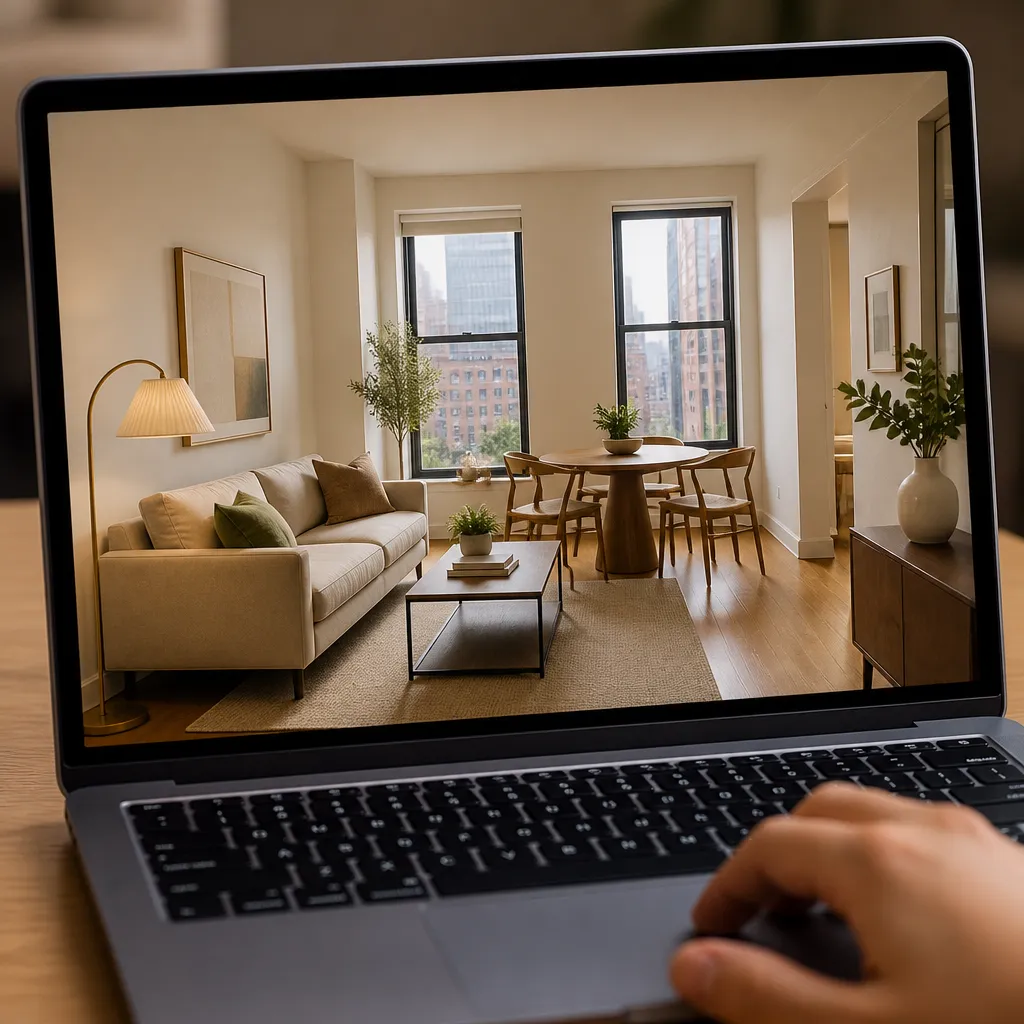
Your first job on the virtual tour is to pin that baseline down. Don't let the agent say "fully furnished" and move on. Ask which specific pieces are in the unit and whether the list is written into the lease. If the listing photos show a dining table, confirm that the table comes with the rental and is not a prop from a staging company.
The minimum most furnished units include
Think in categories. Furniture covers the sofa, the bed or mattress, a dining table, a desk or workspace, and dressers or nightstands. Appliances cover the refrigerator, oven or stove, microwave, dishwasher, and a washer and dryer where the building has them. Household items cover cookware, dishes, utensils, towels, and bedding.
Household items are where most disputes start. Furniture is visible on a camera, but towels and pots are not, and many operators describe these items as "mostly included." Ask the agent to name the cookware set and confirm there are enough plates and towels for the number of people on the lease.
Where furnished listings quietly differ
Two furnished apartments on the same block can have very different inventories. One may have a real desk and a chair you can work from all day. Another may have a small table wedged under a window. On a live call, you can see the desk, but you cannot tell whether the chair has arms or whether the lamp works unless you ask. Request that the agent switch on the lights and open the drawers.
Pro tip: Ask the agent to film the actual mattress from the side, not the staged photo. A bed that sags in the middle is hard to spot in a listing photo but easy to see on a live call when you ask for a close angle.
A furnished listing is only as good as the inventory behind it. If the inventory is vague, you should negotiate as if the apartment is unfurnished.
What an Unfurnished Listing Leaves to You
An unfurnished apartment is a shell with working systems. You get light fixtures, built-in cabinets, bathroom fixtures, closets, plumbing, electrical wiring, and heating or cooling. Kitchen appliances vary. Many unfurnished units still include a refrigerator and stove, but dishwashers and washers are less consistent, so confirm each one on the call.
The most common mistake I see with out-of-state renters is treating "unfurnished" as "I'll move in with what I already own." A moving truck may hold a sofa and a bed, but the apartment will not adjust to what you planned. Measure first, then decide what to bring.
What stays in the unit
Ask the agent to walk you through the built-in storage. Closets are often the most underrated part of an unfurnished tour because they are not furniture, so they stay. Look at the shelving, the depth of the closet, and whether there is a linen closet in the hallway. A closet that looks generous on camera can still be too shallow for standard hangers.
Check the kitchen cabinet count, the sink, and any counter space between the stove and the refrigerator. These are the parts of the apartment you cannot replace with a rental sofa, and they determine how much you can cook in the unit.
Budget for the gap
Before you sign, list every room and the furniture it needs. A bedroom usually needs a bed, a dresser, and a nightstand. A living room needs seating and a table or console. Price those items before you commit, and remember that delivery, assembly, and hauling away old pieces are costs too.
Listing portals display a base rent figure, so the number on the screen may not reflect the furnishings you're counting on. Ask whether the price assumes the appliances and fixtures you saw on the tour are included. Get that answer in writing.
Pro tip: Ask whether the building has a freight elevator or loading dock and what its move-in window looks like. Unfurnished moves involve heavier items, and a narrow elevator or a short move-in slot can add delays on move day.
Utilities and internet are a separate line item
Unfurnished listings often leave electricity, gas, water, and internet out of the rent, and the tour is the moment to ask about each one. Find out which provider serves the building, which utilities the landlord covers, and whether the internet line is already active in the unit. A new installation can take days to schedule, which matters if you start working remotely on day one.
Use the words "often" and "usually" as a prompt to confirm everything. Ask for the specifics, then write them into your notes before you move on to the next unit.
Running a Furnished Tour Over Video
On a furnished tour, your job is to replace the listing photos with a checklist. Before the call, send the agent a list of rooms and what you want to see in each. A good agent will expect this. If the agent pushes back on a planned route, treat that as information about how the unit is managed.
Ask the camera to start at the front door and walk the path a guest would take. That shows you the hallway width, the entry light, and whether the building door is heavy or sticks. It also gives you a sense of how the unit feels before you reach the furniture.
Test the appliances on screen
Ask the agent to run the dishwasher, open the oven door, and turn on every burner. Listen for rattles and check whether the refrigerator door seals. You can't test water pressure on a video, but you can ask the agent to run the kitchen and bathroom taps side by side and watch the stream.
For the washer and dryer, ask whether the machines are in the unit or shared in the building. In-unit machines are a feature you should verify on camera, not assume from a label in a listing.
Check closets, drawers, and the window side
Furnished units usually have fewer closets full of spare items, which is good, but it means you need to inspect the drawers. Open each one. Look at the bottom of the dresser, the back of the nightstand, and the underside of the sofa cushions for damage that a photo would hide.
Ask the agent to turn the camera to the window and show the view and the street noise. A window facing an air shaft behaves very differently from one facing a quiet street, and the tour is your only chance to see both before you sign.
Running an Unfurnished Tour Over Video
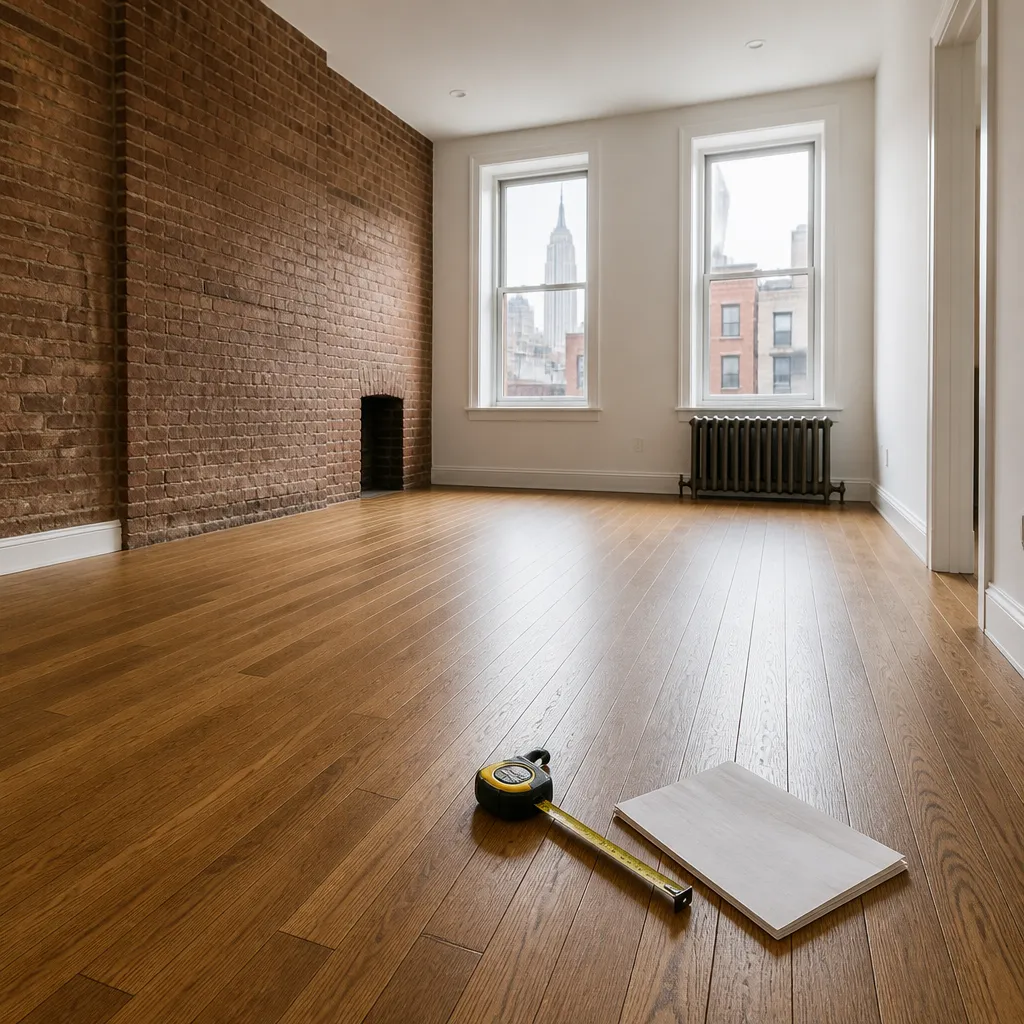
An unfurnished tour is a measurement exercise. Plan to spend more time in the empty rooms than the agent expects, because the empty room is where your furniture will live. Bring a floor plan of your current furniture with dimensions, and keep a tape measure within reach so you can check any number the agent offers.
Most agents will measure a wall if you ask politely. If they can't, request a clear photo of the wall next to a known object, such as a standard door or a sheet of paper, so you can estimate the width without relying on a verbal figure.
Count outlets and plan the layout
Outlets are the most overlooked part of unfurnished tours. Ask the agent to count the outlets in the living room and bedroom, and point the camera at each one. A room with two outlets may force you into an extension cord arrangement for a desk, a lamp, and a television.
Check where the light switches, windows, and radiators sit. Heavy furniture pushed against a radiator can cause problems in winter, and you want to see the heating layout before you buy a sofa that has to fit a specific wall.
Confirm the internet and utility setup
Ask where the internet line enters the unit and whether there is an active account. If you need a new installation, ask how long the provider typically takes to schedule. For remote workers, a week without a reliable connection can mean paying for a temporary desk somewhere else.
Confirm which utilities the landlord covers, which ones you pay directly, and whether heat and hot water are included. If the agent can share a recent utility bill for the unit, ask for it. A bill tells you more than a verbal estimate.
Comparing Furnished, Unfurnished, and Partly Furnished Units
Most renters start with price, but the setup changes what you need to verify on the call. A fully furnished unit moves the risk toward inventory and condition. An unfurnished unit moves it toward layout, utilities, and the cost of your first month. Partly furnished units split the difference and create their own questions about what stays and what leaves.
| Setup | Best for | What to verify on the virtual tour |
|---|---|---|
| Fully furnished | Shorter stays, people who cannot ship furniture, and first-time NYC renters who want to learn neighborhoods before buying anything | Written inventory, appliances switched on during the call, household items, and who handles repairs to furnishings |
| Unfurnished | Longer leases, renters with furniture that already fits, and people who want to shape the space around their own routines | Outlet count, closet depth, kitchen appliances included, utilities and internet setup, and measurements of each room |
| Partly furnished | Renters who own a bed or desk but need the living room covered | Exactly which pieces are in the unit, whether the landlord can remove them during the lease, and what replaces them if they break |
Who each setup suits
Fully furnished units make the most sense when you can't ship furniture, your move is tied to a fixed contract, or you want to test a neighborhood before committing to a sofa. They also suit people who would rather learn the city before choosing permanent pieces for it.
Unfurnished units suit longer leases and renters who already own furniture that fits well. The trade-off is that the first few weeks cost more time and money, and the tour is where you do the planning that a furnished unit does for you.
What the table does not tell you
A comparison table cannot show the lease language that decides how much control you really have. Read the furniture and appliance clauses before you pay anything. Ask whether repairs to furnishings go through the landlord or a separate operator, and how long a typical repair takes.
Also think about the exit. Some furnished leases carry different move-out expectations, and a sofa that must stay in the unit can become a cost you didn't plan for. Get those answers in writing rather than in a text thread.
Mistakes That Cost Renters on Video Tours
Virtual tours make it possible to walk through 10 or 15 apartments in an hour, according to a RentCafe guide to the pros and cons of virtual tours. That speed helps you compare layouts, but it also makes it easy to skip the checklist. In practice, the renters who regret a choice usually toured six units in one morning and could not remember which apartment had a window facing a brick wall.
Keep a separate notes page for each unit. Write down the inventory, the outlet count, the noise you heard, and the questions the agent could not answer. By the third tour, you will not remember which apartment had the working dishwasher.
Trusting staged photos
Listing photos are often taken with staged furniture or after a photographer has moved things around. The sofa in the picture may not be part of the rental. Ask the agent to show the room from the camera position used during the tour, not the angle from the listing.
If the agent resists, treat that as a warning. A reputable operator can show you the real room without a production.
Skipping the live walkthrough
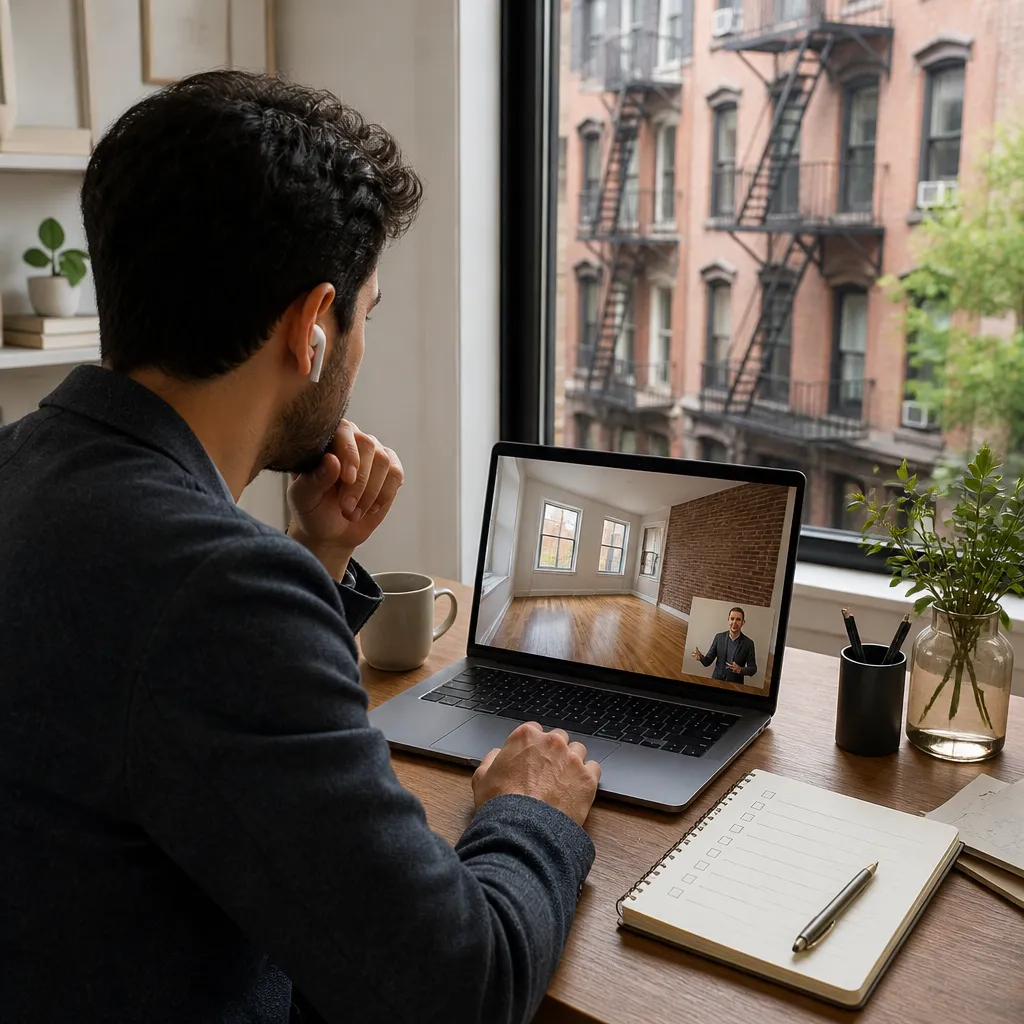
A pre-recorded clip is a marketing piece. It covers the best angles and skips the rest. Insist on a live video call where you can direct the camera, pause on a closet, and ask for a second angle of the bathroom.
Ask the agent to show the window at the time of day you'll be using the space most. Natural light at 9 a.m. looks very different from late afternoon, and you want to see the room as it will feel once you live in it.
Pro tip: Ask for the building's move-in rules before you tour. Some buildings require a set move-in window or a deposit for elevator use, and those rules matter more for an unfurnished move than for a furnished one.
Ignoring the building and the street
The apartment is only part of the decision. Ask about laundry access, package handling, elevator reliability, and quiet hours. On the tour, ask the agent to show the building entrance and the view from the front windows. A furnished unit in a noisy building can wear you down faster than a plain one on a quiet block.
Frequently Asked Questions
Is a furnished apartment always more expensive in NYC?
Not automatically. Compare the total monthly cost, including the furniture and household items you would otherwise buy, delivery and assembly fees, and utilities. A furnished unit with a lower net cost can beat a cheaper unfurnished one once you add up the first month.
Can I trust a virtual tour for a furnished apartment I have never seen?
Trust it only if you get a live walkthrough and a written inventory. A pre-recorded video or a set of staged photos is not enough, because it shows the best parts of the unit and hides the rest.
What should I ask the agent to film first?
Start with the appliances and the closets. Ask the agent to switch on the lights, run the dishwasher, and open every closet and drawer. Those details are the most likely to differ from what the listing suggests.
Does an unfurnished apartment come with a refrigerator and stove?
Often, but not always. Kitchen appliances vary from building to building, so confirm each one on the call and get the list in writing before you commit.
Can I bring my own furniture into a furnished apartment?
That depends on the lease and the operator's rules, so ask before you tour. Find out whether you can store the landlord's items, whether you can add your own, and what happens to any damage. Get the answers in writing.
What if the furniture in the apartment is different when I arrive?
Photograph and video the unit at move-in and compare it against the written inventory from the tour. If something is missing or damaged, report it in writing within the period the lease allows, so the record is clear.
What did you check on your own virtual tour before signing, and what do you wish you had asked the agent?
References

Book your free
relocation inquiry
In 20 minutes, we'll understand your needs and create a personalized plan for your NYC move. No commitment, no pressure — just expert guidance.
+1 (917) 450-8909
Free 20-minute call
All 5 NYC Boroughs
Ready to make your
NYC move happen?
In 20 minutes, we'll understand your needs and create a personalized plan for your NYC move. No commitment, no pressure — just expert guidance.
