Moving to NYC From Boston: Remote Apartment Search Guide

Moving to NYC from Boston looks like a short hop on a map. Both cities are dense, transit-heavy, and full of people who have made the same jump. The hard part is the apartment. NYC listings can disappear within a day, and the Boston habit of touring a unit on a Saturday and deciding by Monday rarely works when you are still living in Boston and can only visit on weekends.
This guide covers what changes after you cross the state line, what stays the same, and how to find and tour an apartment without being in the city. Virtual apartment tours sit at the center of the process, so the steps below focus on using them to make a confident decision before you sign a lease.
Table of Contents
- Quick Takeaways
- What Changes When You Move From Boston to NYC
- What Stays the Same After the Move
- Budgeting for the Rent Gap
- Why Virtual Apartment Tours Work for a Boston to NYC Move
- Comparing Remote Apartment Search Approaches
- Lease Red Flags to Check Remotely
- Frequently Asked Questions
- References
Quick Takeaways
| Key Insight | Explanation |
|---|---|
| Boston habits transfer, but NYC timing does not | A weekend tour and a Monday decide schedule often loses the unit. Have your documents and budget ready before your first tour so you can answer within hours. |
| Budget from the total cost, not the headline rent | Ask for every charge that applies to a unit in writing before you spend time on a tour. Verbal estimates tend to change once the lease arrives. |
| Use live virtual tours to screen, then confirm | A live video walkthrough lets you rule out units quickly. Plan one in-person visit or a second live session before you commit to a lease. |
| Ask for the specific unit, not the marketing photos | Request views of every window, the bathroom ventilation, and the kitchen with cabinets open. Photos are taken to flatter the space. |
| Time the commute from the front door | Use the transit route you will take at rush hour, on a weekday, from the actual building address. Listing commute claims are often optimistic. |
| Build one folder before you start applying | Keep ID, recent pay stubs, an employer letter, and reference contacts together so you can respond the same day a landlord or agent asks. |
| Compare the same unit type, not city averages | Cost of living pages give you direction, but your real comparison is a Boston unit against an NYC unit of the same size in the neighborhoods you are considering. |
What Changes When You Move From Boston to NYC
The first change is scale. NYC is made up of five boroughs, and an apartment in Manhattan, Brooklyn, Queens, the Bronx, or Staten Island can differ sharply in size, building age, and layout. Many Boston transplants arrive expecting a bigger version of the place they left. In practice, the unit you can afford at a given budget is often smaller than what you had at home, so decide early which trade-offs you will accept.

The second change is pace. A good listing can be taken before you finish your first call, so your documents, budget, and must-have list need to be ready before you start. Speed is the main difference between a Boston search and an NYC search. You need to be able to say yes or no within hours of a showing, not days.
How the Five Boroughs Change Your Search
Choosing a borough is really choosing a daily routine. Manhattan keeps you close to offices and most of the city's cultural life, and it tends to cost more for the same amount of space. Brooklyn and Queens often offer more room for the money in many neighborhoods, though your commute may depend heavily on which subway line is closest to your door. The Bronx and Staten Island deserve research too, since they change both the commute and the feel of daily life.
A practical way to narrow the field is to pick two boroughs, not five, and run the same test on a handful of units in each. Compare the rent, the commute from the building to your job, and how much time you would spend on transit each week. Two boroughs compared carefully will give you a clearer answer than five skimmed in a browser tab.
Getting Around Without Your Boston Routine
Many people who lived in Boston without a car assume NYC will feel familiar. Subway and bus routines do overlap, but the stations, transfer points, and express and local service patterns take time to learn. A common mistake is judging a neighborhood by its distance on a map. Instead, time the trip from the front door to the stations you will use at rush hour, and do it on a weekday.
Pro tip: Before your first virtual tour, run the route from the building address to your job or your main stop in the transit app you plan to use every day. Save the screenshot. It will tell you more than any commute claim in the listing.
What Stays the Same After the Move
Plenty of the fundamentals travel with you. Landlords still want a complete application, proof of income, identification, and references. A lease is still a binding contract, and the questions you would ask in Boston about heat, repairs, and what the lease covers still matter in NYC. The difference is that the paperwork is usually requested faster and in more detail.
Your credit and income history follow you as well. If you are moving with a job offer, a letter from your employer confirming salary and start date often helps more than a bank statement alone. If your role is remote, keep a recent pay stub and a letter that describes your position and whether it is remote, so the application does not raise questions you cannot answer quickly.
Your Remote Work Setup Still Has to Work
If you work from home, the apartment has to function as an office for every hour you are logged in. Ask during a live tour where the desk would go, whether there is a room with a door, and how thick the walls and windows feel. Ask about the internet providers that serve the building and whether other tenants have had reliable service. Neighbor noise and street noise can ruin a video call faster than a small kitchen ever will, so listen for both while the camera is running.
Paperwork That Looks Familiar
Most of your Boston application packet works in NYC with minor changes. Scan everything into one folder before you begin: ID, recent pay stubs, tax returns if requested, and contact information for a reference who can speak about your rent history. Having the folder ready means you can respond the same day an agent asks for it, which matters in a fast market.
Budgeting for the Rent Gap
Cost of living comparisons are useful for setting expectations, but they are averages. A page like the Boston versus New York comparison on apartments.com can show the broad direction of costs, but it cannot tell you what a unit in your target neighborhood will cost when you are ready to sign. Use these pages to frame the question, then replace the averages with real listings you can actually tour.
A monthly budget for NYC should include rent, utilities, internet, transit, and the costs that appear only at signing. Some listings carry fees beyond rent, and move-in costs can take up a meaningful share of your first month. Ask for the full cost picture in writing before you spend time on a tour, because a verbal estimate has a way of changing when the lease shows up.
Reading Cost of Living Pages Without Getting Misled
A city average blends older walk-up buildings with new construction, and it mixes studios with multi-bedroom units. If you are comparing Boston and NYC, match the unit type, the building style, and the neighborhood you are actually considering. Otherwise you will end up with a number that tells you very little about your own move, and you may rule out a neighborhood you would have liked.
Building a Budget Around a Specific Unit
Once you have a shortlist, build a budget for each unit rather than for the city as a whole. Add the rent, estimated utilities, and a transit cost based on the commute you timed earlier. Then compare the total with your take-home pay after taxes. A unit that looks affordable on rent alone can become a stretch once the other costs are added, so the spreadsheet should exist before the first tour, not after.
Why Virtual Apartment Tours Work for a Boston to NYC Move
A virtual apartment tour is a live video walkthrough of a specific unit, conducted while you watch and direct the camera. It is the tool that makes a remote search work, because you can screen several units in one session instead of booking trips to the city. Our virtual apartment tours are built for people who cannot be in NYC on short notice, and over 12 years of NYC expertise has taught us that the tours that go well are planned as carefully as an in-person visit.
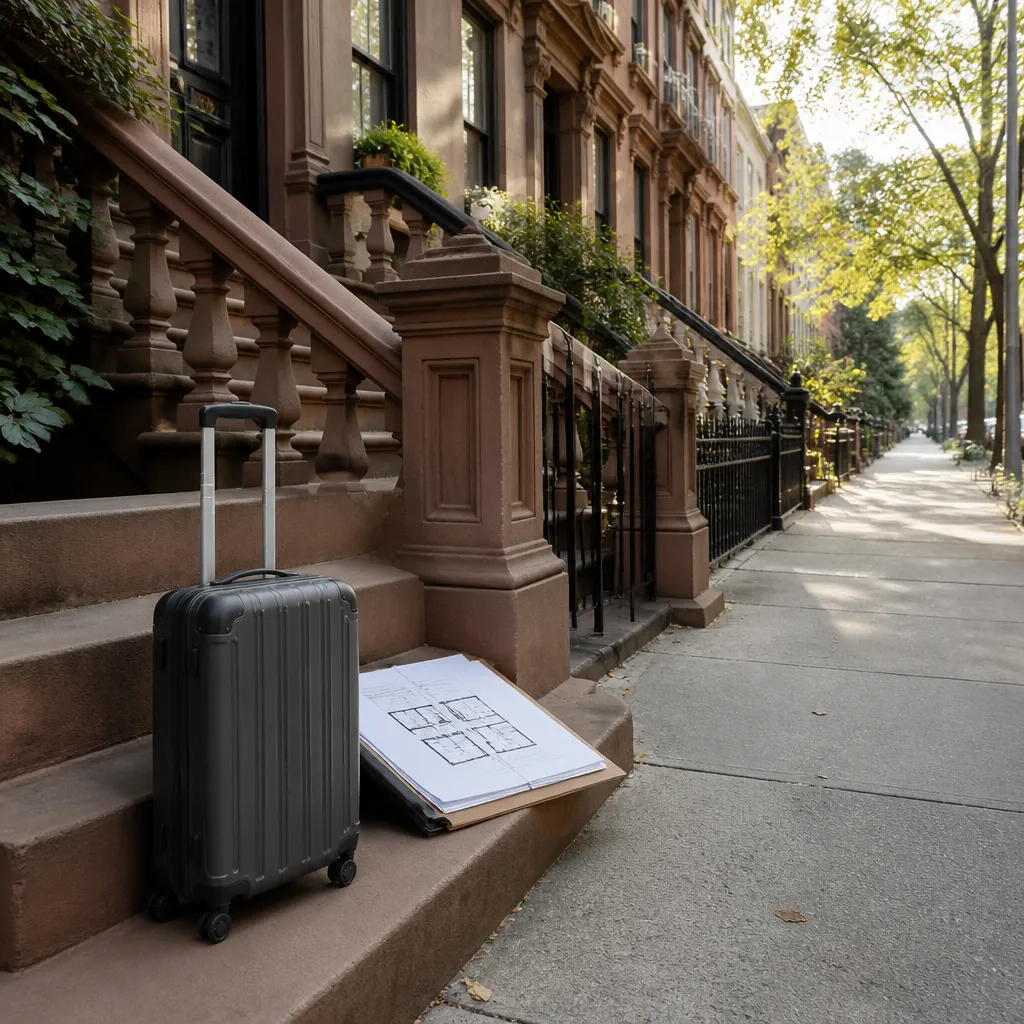
A recorded clip or a set of listing photos can show you finishes, but they cannot show you water pressure, the noise level at 9 p.m., or whether a window looks out on a brick wall. A live tour lets you ask for those things on the spot. Insist on a live session for every unit that makes your shortlist, and treat any refusal as useful information.
Scheduling Tours From Boston
Book tours in a block rather than one at a time. If you can, set aside two or three evenings or a single morning and schedule back-to-back walkthroughs. Boston and NYC share the same time zone, so you do not need to adjust your clock or your calendar, which keeps scheduling simple. Ask for the unit to be shown while the building is in normal use, and request a look at the lobby and the street if the listing sits on a busy block.
What to Ask During a Live Walkthrough
Have a written list before the call starts. Ask the person showing the unit to open the bathroom fan, turn on the kitchen faucet, show the cabinets with the doors open, and walk to every window, including the one in the bedroom. Ask how the building handles trash and recycling, and whether laundry is in the unit or in the building. Record the call with permission, then review it the same night while the details are still fresh.
Pro tip: Ask the person showing the unit to pan slowly along the ceiling and the baseboards. Water stains, hairline cracks, and gaps around windows are much easier to spot on a steady pan than during a quick walkthrough, and they tell you more about maintenance than the listing copy does.
A unit you have only seen through a curated video is a unit you have partly seen. Treat the live tour as the first half of the evaluation and an in-person visit or second live session as the second half.
Comparing Remote Apartment Search Approaches
Most people moving from Boston end up combining three approaches. The real question is which one carries the decision and which one only supports it. The table below compares the options you are most likely to weigh, based on what each one can and cannot show you before you commit.
| Approach | Where It Works | Where It Breaks Down |
|---|---|---|
| Self-directed listing search | Useful for learning neighborhoods, typical rents, and common layouts before you book anything | Photos and descriptions can hide problems, and many units you save will already be gone by the time you call |
| Virtual apartment tours | Lets you screen several units in one session and ask questions in real time | Video cannot capture smell, street noise at night, or how the block feels, so it needs a follow-up step |
| Short in-person visit to NYC | Gives you direct experience of the block, the commute, and the building itself | Costs time and travel money, and tends to squeeze decisions into a few days |
When a Self-Directed Search Makes Sense
Start with listings if you are still choosing a borough. Browsing for a couple of weeks shows you what your budget buys in each area and which layouts appear most often. Save the units that match your priorities, then move on quickly. Do not spend your evenings reading descriptions of units you cannot tour, because the time is better spent building your budget and document folder.
Where Virtual Tours Fit Between Browsing and Traveling
The strongest sequence is browsing first, then live virtual tours for your top units, then one trip to NYC for a final visit before signing. Virtual tours belong in the middle because they cut the shortlist before you spend money on travel. In practice, a shortlist of three to five units toured live usually gives you enough information to decide whether a single trip is worth taking.
Do not skip the final in-person step if the lease is long or the rent is high. The trip does not need to be long. A single day can cover the building, the block, the nearest stop, and a few neighbors, and that day often reveals something a camera misses.
Lease Red Flags to Check Remotely
Remote searches attract a specific kind of risk. Listings can be outdated, units can be misdescribed, and some people will push for payment before you have seen anything real. Your job is to slow the process down at the points where pressure tends to appear.

The first red flag is a unit that cannot be shown live. If the person offering the apartment refuses a live video walkthrough and insists on a prerecorded clip or a photo set, treat that as a warning. The second is a request for money before you have toured the unit or read a written lease. The third is a fee breakdown that changes from one message to the next.
Payment Requests Before You Tour
Never send money for a unit you have not toured live, and never use a payment method that cannot be traced or reversed. Ask to see the lease before any deposit is discussed. A legitimate landlord or agent should be able to confirm the building address, the lease terms, and the owner or management company without fuss.
Confirming the Unit Is the Unit You Toured
Once a lease is on the table, compare the unit number, floor, and address with what you saw on your tour. Ask the building manager to confirm the unit number in writing. If the lease describes a different unit from the one you toured, get a corrected version before you agree to anything. Mismatches like this can happen when a listing is copied from an older posting.
Finally, check that the lease matches what you were told. Verbal promises about repairs, pets, or move-in dates belong in writing. A short addendum is worth far more than a friendly assurance on a video call.
Frequently Asked Questions
How far ahead should I start a virtual apartment search when moving to NYC from Boston?
Start four to six weeks before your target move date, beginning with a budget and a document folder. That gives you time to build a shortlist, run live tours, and submit an application without rushing into a unit you have not fully evaluated.
Can I rely on a virtual tour alone before signing a lease?
Use a live virtual tour to screen units, but plan one in-person visit before signing if you can. Video cannot show smells, street noise at night, or how the building feels during normal use.
Is Boston rent a good benchmark for NYC?
Not on its own. Compare the same unit type in the same neighborhoods rather than city averages. A Boston rent figure tells you less than the real NYC listings you are willing to tour.
What should I ask for before a virtual tour starts?
Ask for a live session, the specific unit number, and a clear view of every room and window. Request time to check the bathroom fan, the kitchen faucet, and the cabinets with the doors open.
What should I do if the unit on the lease looks different from the tour?
Stop the process and request written confirmation of the unit number, floor, and address. Do not sign until the lease matches the unit you actually toured.
If you have made the move from Boston to NYC remotely, tell us which step took the longest for you, whether that was the budget, the tours, or the paperwork.
References


Book your free
relocation inquiry
In 20 minutes, we'll understand your needs and create a personalized plan for your NYC move. No commitment, no pressure — just expert guidance.
+1 (917) 450-8909
Free 20-minute call
All 5 NYC Boroughs
Ready to make your
NYC move happen?
In 20 minutes, we'll understand your needs and create a personalized plan for your NYC move. No commitment, no pressure — just expert guidance.
