Lawyer Moving to NYC: Apartment & Career Guide

If you are a lawyer moving to NYC, you already know that landing the right apartment is almost as competitive as making partner. The Manhattan rental market hit a median of $5,285 per month in August 2026, active listings dropped roughly 20% year-over-year, and desirable units routinely disappear within days of listing. Add the complexity of navigating a new legal market, sitting for the New York bar, and figuring out which borough actually makes sense for your commute, and the relocation quickly becomes a full-time project on top of your full-time job. This guide cuts through the noise with specific, honest guidance written for attorneys who are serious about getting this move right.
Table of Contents
- Quick Takeaways
- Understanding the NYC Rental Market as an Attorney
- Best Neighborhoods for Lawyers in NYC
- Budgeting Your NYC Apartment on a Legal Salary
- The NYC Rental Application: What Attorneys Need to Know
- Navigating the New York Legal Market
- Neighborhood Comparison for Relocating Lawyers
- Frequently Asked Questions
- References
Quick Takeaways
| Key Insight | Explanation |
|---|---|
| The 40x rule is your financial floor | Most NYC landlords require annual income equal to 40 times the monthly rent. On a $5,500 apartment, that means $220,000 in verifiable income, not just offer letters. |
| Manhattan listings are shrinking fast | Active listings fell roughly 20% year-over-year by mid-2026. Waiting until your start date to begin searching is a common mistake that leaves attorneys scrambling for suboptimal options. |
| Brooklyn is no longer the "affordable" fallback | Brooklyn's median rent hit a record $4,368 per month in August 2026. It is still worth considering for space and commute variety, but budget expectations need updating. |
| Law firm clusters define your commute math | Biglaw firms concentrate in Midtown (Park Avenue corridor) and Downtown (near the courts). Your neighborhood choice should start with a realistic commute time to those corridors. |
| New York bar admission has specific reciprocity rules | Attorneys admitted elsewhere cannot simply practice in New York without sitting for the bar or qualifying under UBE score transfer rules. Start the process before you arrive. |
| Off-market listings exist and matter | A significant share of NYC rentals, especially in desirable doorman buildings, never appear on public search portals. Relationships with building managers and specialized relocation advisors are the only way in. |
| Security deposit is capped at one month's rent | New York State law limits security deposits to one month's rent. Any landlord asking for more is either misinformed or testing your knowledge of the rules. |
Understanding the NYC Rental Market as an Attorney
The NYC rental market in 2026 is one of the tightest on record. Manhattan's average rent reached $5,769 per month across all unit sizes as of September 2026, with studio apartments averaging $4,290, one-bedrooms averaging $5,690, and two-bedrooms averaging $7,117. These are not outlier numbers at luxury buildings. They reflect the market broadly.
For attorneys, this creates a specific dynamic. Your income is often strong enough to qualify on paper, but the application window is brutally short. Apartments in move-in condition in the right neighborhoods attract multiple applications within 24 to 48 hours. Attorneys relocating from out of state are at a structural disadvantage: you cannot tour in person on a Tuesday afternoon, your documents take time to gather from a distant employer, and you may not have local references.
The competitive pressure is compounded by shrinking supply. Available listings in Manhattan dropped around 20% year-over-year by August 2026. Brooklyn, long considered the pressure-relief valve, has hit its own record rents, with the median reaching $4,368 that same month. This is not a market where casual searching yields good results.
The attorneys who find great apartments in NYC are the ones who treat the search with the same preparation they bring to a complex deal: thorough documentation, clear priorities, and a willingness to move decisively when the right opportunity appears.
Pro tip: Start your apartment search at least 60 to 90 days before your intended move-in date. NYC leases typically begin 30 to 45 days after signing, and you need time to identify neighborhoods, gather documents, and be ready to apply on short notice. Attorneys who start searching two weeks before their start date almost always make compromises they regret.

Best Neighborhoods for Lawyers in NYC
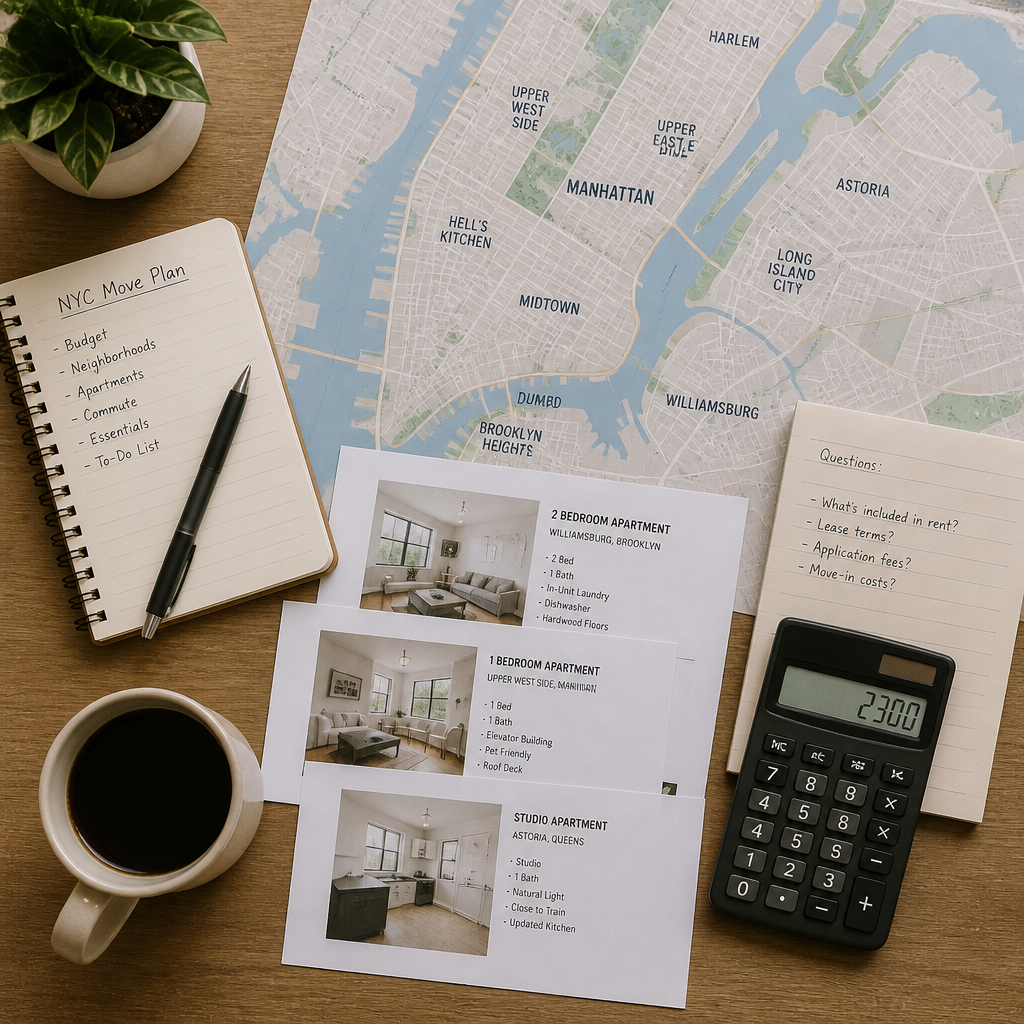
The right neighborhood for a relocating attorney comes down to three variables: where your firm or court is located, how much commute time you can tolerate on a 60-plus-hour workweek, and what you actually want to come home to. Getting all three right simultaneously takes some deliberate thinking.
Midtown East and Murray Hill
Midtown East puts you within walking distance of the Park Avenue corridor where a large share of New York's major law firms are concentrated. The trade-off is density and noise. Apartments here lean toward high-rise buildings with doormen and amenities, which suits attorneys who value convenience over character. Murray Hill, just to the south, skews younger and slightly more affordable while keeping the same commute advantage.
Upper West Side and Upper East Side
Both sides of Central Park offer a different quality of life, with larger apartments, quieter streets, and strong subway connections to Midtown. The Upper West Side (1, 2, and 3 trains) and Upper East Side (4, 5, 6 trains) both put Midtown around 20 minutes away on a reliable subway route. Attorneys with families or those who want more living space relative to rent dollars often land here.
Harlem and Hamilton Heights
Harlem offers real value compared to the neighborhoods further south, with more square footage per dollar and strong transit access. The A and C trains at 145th Street connect to Midtown in roughly 20 minutes. The neighborhood has a strong dining and culture scene, and attorneys who live there consistently report being pleasantly surprised by what they find compared to their expectations.
Brooklyn Heights, DUMBO, and Cobble Hill
For attorneys willing to cross a bridge, Brooklyn Heights remains one of the most desirable residential neighborhoods in the city, with brownstone-lined streets, waterfront access, and subway options (2, 3, 4, 5 trains) that reach Lower Manhattan in under 15 minutes. DUMBO and Cobble Hill attract attorneys who want a neighborhood feel with easy access to both the Financial District and Midtown. Brooklyn Heights has a notably strong community of legal professionals, particularly those working in Lower Manhattan or federal court.
Downtown Manhattan and the Financial District
The Financial District has transformed into a genuine residential neighborhood over the past decade. For attorneys at firms near the courts or the World Financial Center, living downtown eliminates the commute entirely. Rents tend to be slightly lower than comparable Midtown-adjacent apartments, and newer buildings offer strong amenities.
Pro tip: Before committing to a neighborhood, do a dry-run commute during a weekday morning from that specific address to your firm's building. Subway timing on paper and subway timing at 8:15 a.m. on a Tuesday are different experiences, and attorneys with long days need a commute that works reliably, not just on average.
Budgeting Your NYC Apartment on a Legal Salary
NYC's rental market requires attorneys to think carefully about the relationship between their gross income, their take-home pay after New York City and State taxes, and what the market actually costs. New York City imposes its own income tax on top of state taxes, which meaningfully reduces take-home relative to other markets.
A common mistake is budgeting based on gross salary. A first-year associate at a large firm earns a strong salary on paper, but after federal taxes, New York State taxes (which reach into the mid-single digits on higher income), and New York City income tax, the effective monthly take-home is considerably lower than dividing the annual figure by twelve would suggest. Budget against take-home, not gross.
The 40x rule runs in the other direction: landlords calculate it against gross annual income, not take-home. So a $6,000 apartment requires $240,000 in demonstrable gross annual income. For many associates this is achievable, but you need to show it with documentation, not just describe it. A pending offer letter or employment contract is often acceptable for attorneys with documented start dates, but it must clearly state the salary.
A practical framework: keep housing costs at no more than 25 to 30 percent of your take-home. If that math puts you below the market rate for your preferred neighborhood, either expand your neighborhood options, consider a roommate arrangement (which is common among first-year associates regardless of income), or adjust your amenity expectations. A studio in a prime building or a one-bedroom in an emerging neighborhood often delivers more satisfaction than a one-bedroom in a prime building that strains your finances every month.
The NYC Rental Application: What Attorneys Need to Know
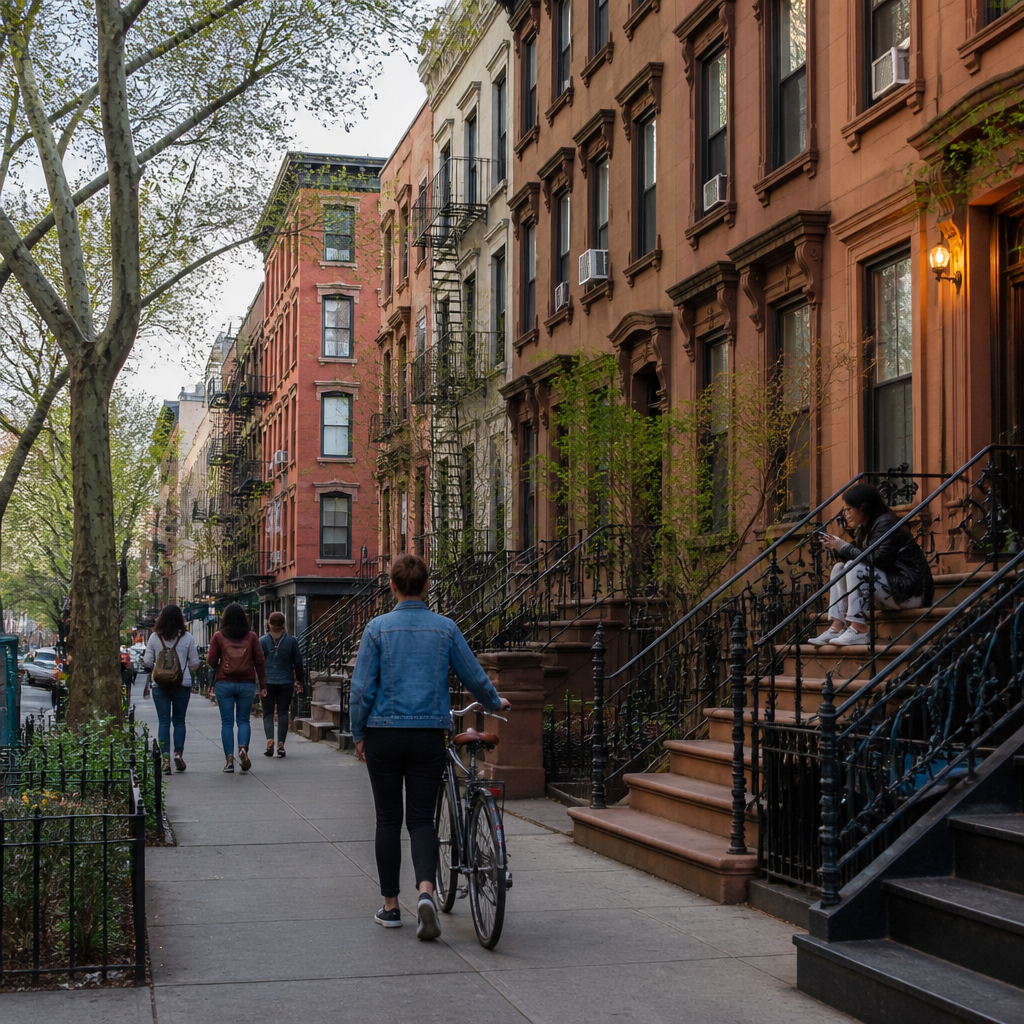
The NYC rental application process has its own logic, and knowing it in advance prevents the most common failure modes for out-of-state attorneys.
Documents You Need Ready Before You Search
Most landlords require photo ID, recent pay stubs or an offer letter confirming salary, bank statements (typically two to three months), the previous two years of tax returns, and authorization for a credit and background check. Attorneys relocating from another state often lack NYC-specific rental history, which matters less than people think, but having a clean credit report and a strong employment record compensates effectively. The application fee for a rental apartment is capped at $20 under New York State law, with limited exceptions for co-op and condo buildings.
The Guarantor Question
If you are a first-year associate with a recent law school debt load or limited savings history, some landlords may request a guarantor even if your salary technically meets the 40x threshold. This is more common in larger, professionally managed buildings. Third-party guarantor services exist as an alternative when a personal guarantor is not practical. It is worth knowing this option before you need it, rather than discovering it while a landlord is waiting for an answer.
Security Deposit and Move-In Costs
New York State law caps the security deposit at one month's rent. First month's rent plus one month's security is the standard move-in cost in a no-broker-fee rental. If you hire a broker independently to help you find an apartment, a broker fee is typically added on top. Understand who engaged the broker before agreeing to pay a fee.
Co-ops Are a Different Process
Co-op buildings, which are common in Manhattan, require board approval in addition to landlord approval. The process involves a formal application package, a board interview, and the building's own financial requirements, which often exceed standard rental thresholds. Co-ops generally move more slowly and are not suitable if you need to secure housing quickly for a start date. Rental apartments in standard buildings are a more practical first-year choice for most relocating attorneys.
Pro tip: Assemble your complete document packet before you begin actively touring. When the right apartment appears, having everything ready to submit within two hours can be the difference between getting the apartment and watching someone else sign the lease. NYC landlords do not wait for applicants who need a few more days to gather paperwork.
Navigating the New York Legal Market
The practical and professional dimensions of moving to New York as an attorney go beyond finding an apartment. The New York legal market is its own ecosystem, and understanding it before you arrive puts you at a genuine advantage.
Bar Admission and Reciprocity
New York does not have broad reciprocity with other states. Attorneys admitted elsewhere cannot simply file a motion pro hac vice for ongoing practice without New York admission. The path forward depends on your situation: if you passed a Uniform Bar Exam in another state, New York accepts UBE score transfers for scores meeting the state's minimum threshold, and the transfer process through the New York State Board of Law Examiners is relatively straightforward. If you passed a non-UBE exam, you will need to sit for the New York bar. Some attorneys also qualify for admission on motion based on years of active practice in a UBE jurisdiction. Confirm your specific eligibility with the New York State Board of Law Examiners directly, and start the process well before your move.
Where the Firms Are
New York's major law firm offices cluster in two main corridors. Midtown Manhattan, particularly along Park Avenue and the streets between Grand Central Terminal and Rockefeller Center, is home to a large share of the city's biggest firms. Downtown Manhattan, near Foley Square and the Financial District, concentrates litigation-heavy practices given the proximity to the federal and state courthouses and City Hall. Government legal offices, public defenders, and DA offices are also primarily downtown. Knowing which corridor your work places you in is the single most important factor in choosing a residential neighborhood.
Culture and Expectations in NYC BigLaw
New York BigLaw operates at a specific intensity. The hours are real, the expectations around responsiveness are higher than in most other markets, and the culture within firms varies more than external reputation would suggest. Research your specific firm's internal culture through conversations with current or former associates before you arrive. This shapes not just how you'll work, but how much your commute time will actually matter in daily life.
Government, Public Interest, and Boutique Practices
Not all attorneys moving to New York are joining large firms. Government agencies, nonprofit legal organizations, public defender offices, boutique litigation shops, and in-house legal departments all offer distinct environments and salary ranges. Budget and neighborhood decisions should be calibrated to your actual compensation, not the BigLaw scale that dominates most relocation conversations. New York has a rich ecosystem of legal employment across the spectrum, and many attorneys find the non-BigLaw track more sustainable and equally engaging.
Neighborhood Comparison for Relocating Lawyers
The table below compares three of the most commonly chosen approaches to NYC neighborhood selection for relocating attorneys, based on the real trade-offs each involves.
| Approach | Best For | Key Trade-offs |
|---|---|---|
| Midtown-Adjacent Living (Murray Hill, Midtown East) | Attorneys at Park Avenue corridor firms who value a walkable or very short commute and prefer modern high-rise amenities | Higher rents for smaller spaces, dense and noisy street environment, less neighborhood character. One-bedrooms typically $5,500 and above. Strong convenience but limited outdoor space. |
| Upper Manhattan (Upper West Side, Upper East Side, Harlem) | Attorneys who want more space and residential neighborhood feel with reliable subway access to both Midtown and Downtown corridors | 20 to 30 minute subway commutes depending on exact location. Slightly more square footage per dollar. Harlem offers the best value. Upper West and East Side are still expensive but offer larger pre-war apartments. |
| Brooklyn (Brooklyn Heights, Cobble Hill, DUMBO) | Attorneys at Downtown Manhattan firms, those who prioritize neighborhood quality and brownstone character, and those willing to cross the bridge daily | Median rents hit records in 2026 ($4,368/month), so the cost advantage over Manhattan is narrower than expected. Commute to Midtown is longer (35 to 45 minutes). Excellent for Lower Manhattan commuters. Strong attorney residential community in Brooklyn Heights. |
Frequently Asked Questions
How far in advance should a lawyer moving to NYC start the apartment search?
At minimum, 60 days before your intended move-in date, and 90 days is better. NYC leases typically begin 30 to 45 days after signing, and the time to identify neighborhoods, assemble documents, and actually find the right unit eats up the remaining window quickly. Attorneys who begin searching two weeks before their start date consistently make compromises they regret for the duration of their lease.
Do I need to be admitted to the New York bar before I start working at a New York firm?
Most large firms hire associates who are not yet admitted to the New York bar, particularly those starting in the fall after taking the July bar exam. Firms typically give a limited window for associates to pass the bar. However, if you are relocating as a lateral from another state, your situation is different, and you should confirm admission timing directly with your new employer. UBE score transfers can shorten the timeline significantly compared to sitting for the full exam again.
What is the 40x rule and how does it apply to attorneys with student loan debt?
The 40x rule means your annual gross income must be at least 40 times the monthly rent. On a $5,500 apartment, that requires $220,000 in annual income. Student loan debt does not directly affect the 40x calculation most landlords use, but it does appear on your credit report and can affect debt-to-income ratios in co-op board reviews. For standard rental apartments, income and credit score are the primary factors. A clean credit history and a documented employment offer carry more weight than the absence of debt.
Is Brooklyn a realistic option for a lawyer working in Midtown?
It depends on which part of Brooklyn and how you define realistic. From Brooklyn Heights to Midtown, a subway commute runs 35 to 45 minutes depending on express train availability. Many attorneys make that commute daily without issue, particularly if they start early or leave late to avoid the peak crush. From neighborhoods further into Brooklyn, the commute to Midtown extends to 50 or 60 minutes, which becomes genuinely difficult on a heavy work schedule. If your firm is downtown rather than Midtown, Brooklyn becomes a much stronger option, with some neighborhoods placing you within 15 minutes of the Financial District.
What documents does a relocating attorney need for a NYC rental application?
The standard packet includes a government-issued photo ID, your employment offer letter or recent pay stubs confirming salary, two to three months of bank statements, your last two years of tax returns, and consent to a credit and background check. If you are relocating from another state and do not yet have pay stubs from your new employer, a signed offer letter on firm letterhead clearly stating your salary is generally acceptable. Having this entire packet assembled in advance, ready to send within hours of finding a unit, is not optional. It is the practical requirement for competing in this market.
Are there apartments in NYC that do not require a broker fee?
Yes. A significant portion of NYC rentals are listed directly by the landlord or management company without a broker representing the landlord's side. In those cases, no broker fee is owed unless you independently hired your own broker to assist you. That said, many of the most desirable buildings in established neighborhoods are managed through agents, and the off-market inventory, which can be the best-quality and most competitively priced, often requires a broker or specialized relocation service to access.
Should I rent or buy when moving to NYC as an attorney?
Rent first, for at least one year. New York City's purchase market is complex, co-op board approvals take months, and making a large purchase decision before you understand which neighborhood actually fits your work schedule and personal life is a common and expensive mistake. Spend your first year learning the city from the inside, then make a purchase decision with real information. Almost every attorney who has done this agrees the rental year was worth it.
Have you recently moved to New York City as an attorney, or are you currently in the process? Share what worked, what surprised you, or what you wish you had known before you started.
References
- Manhattan average rent by apartment size and neighborhood, updated September 2026
- NYC residential rental market data for August 2026, including Manhattan and Brooklyn median rents and listing inventory changes
- NYC rental market report for June 2026 covering record Manhattan rents and Brooklyn market pace
- What you need to rent an apartment in NYC: paperwork, fees, and application process explained
- Where law firms cluster in NYC and what that means for office location and commute planning


Book your free
relocation inquiry
In 20 minutes, we'll understand your needs and create a personalized plan for your NYC move. No commitment, no pressure — just expert guidance.
+1 (917) 450-8909
Free 20-minute call
All 5 NYC Boroughs
Ready to make your
NYC move happen?
In 20 minutes, we'll understand your needs and create a personalized plan for your NYC move. No commitment, no pressure — just expert guidance.
.avif)