What Does a NYC Relocation Specialist Do?

Moving to New York City without local knowledge is not just stressful. It is expensive. The average rent in Manhattan currently sits at roughly $5,769 per month, Brooklyn is close behind, and public rental inventory has tightened dramatically. Bidding wars are common, off-market apartments are increasingly where the best deals live, and the application process is ruthlessly competitive. A NYC relocation specialist exists precisely because navigating all of that from another state or another country, on a deadline, is genuinely difficult. This guide explains exactly what a specialist does at every stage of your move, why it matters, and how to tell whether you actually need one.
Table of Contents
- What Is a NYC Relocation Specialist?
- Quick Takeaways
- The Step-by-Step Process: From Consultation to Keys
- Off-Market Listings: The Advantage You Cannot Get Alone
- Neighborhood Matching: More Than a Map Search
- Applications, Negotiations, and Lease Signing
- Relocation Approaches Compared
- Who Benefits Most from a NYC Relocation Specialist?
- The FARE Act and What It Means for Your Costs
- Frequently Asked Questions
- References
What Is a NYC Relocation Specialist?
A NYC relocation specialist is a licensed real estate professional whose entire practice is built around helping people move to New York City, not just around it. This is a different job from a general real estate agent who occasionally handles rentals on the side. A true specialist knows the rental inventory across all five boroughs, maintains direct relationships with landlords and building managers, understands the paperwork requirements of co-ops, condos, and rental buildings, and has done this specific process enough times to anticipate problems before they happen.
The practical difference shows up fast. When you search on your own, you see whatever landlords have chosen to list publicly. A relocation specialist with active borough relationships sees apartments before they are listed, apartments that are never listed at all, and has context on which buildings have responsive management and which ones do not.
Quick Takeaways
| Key Insight | Explanation |
|---|---|
| A specialist reduces wasted search time | Out-of-state movers who search independently often spend weeks on apartments that do not match their real needs. A specialist filters against your priorities from day one. |
| Off-market access is a meaningful edge | Public rental inventory in NYC fell 31% year over year in mid-2026. Specialists with broker networks surface apartments that never appear on Zillow, StreetEasy, or similar portals. |
| Neighborhood matching requires local knowledge | The "right neighborhood" depends on commute time, lifestyle, school district, noise tolerance, and budget. No algorithm handles all of those variables simultaneously. |
| The FARE Act changed who pays broker fees | Since June 11, 2025, landlords who hire a broker must pay that broker's fee. Hiring your own tenant's representative now has a much clearer cost-benefit calculation. |
| Application errors cost apartments | NYC landlords move fast. An incomplete application or missing document can lose you an apartment to another applicant within 24 hours. |
| Lease review is not optional | NYC leases can include unusual clauses around subletting, renovations, and guarantors. A specialist who has reviewed hundreds of leases spots red flags immediately. |
| Free consultations are standard | Reputable NYC relocation services offer a free initial consultation. Use it to test whether the specialist actually listens and understands your situation before committing. |
The Step-by-Step Process: From Consultation to Keys
The process a good NYC relocation specialist runs is sequential and deliberate. Each stage builds on the last, and skipping any of them creates problems downstream.


Stage 1: The Free Initial Consultation
This is where the real work starts. A competent specialist will ask detailed questions: What is your actual budget including utilities and fees? What is your timeline? Where will you work, and how will you commute? Do you have pets, or plan to? What are your non-negotiables versus nice-to-haves? The output of a good consultation is a written brief that defines your search criteria precisely enough that the specialist can act on your behalf without requiring your input at every turn.
A common mistake is treating this consultation as a formality. Clients who come in with vague preferences ("something in Brooklyn, maybe") get vague results. The more specific you are in session one, the better your search goes.
Stage 2: Neighborhood Research and Shortlist
Once your priorities are mapped, the specialist produces a shortlist of neighborhoods that match them. This is not a generic "best neighborhoods" list. It is built around your specific commute, your budget band, your lifestyle preferences, and practical factors like whether you need a doorman building for package delivery or ground-floor parking for a vehicle.
In practice, clients who relocate from outside NYC frequently underestimate how much neighborhoods change within a few blocks. A specialist who works a borough daily knows those micro-distinctions. A two-block difference in some parts of Brooklyn or Queens can mean a significant change in price, transit access, and feel.
Stage 3: Apartment Search and Showings
With a neighborhood shortlist confirmed, the specialist begins active search. This means pulling publicly listed inventory, reaching into off-market contacts, and scheduling showings with your timeline and remote status in mind. Many out-of-state clients cannot visit multiple times, so a good specialist will conduct video walkthroughs and give honest assessments rather than just describing the positives.
Pro tip: Ask your specialist to record video walkthroughs during in-person visits when you cannot attend. A ten-minute honest walkthrough pointing out actual flaws, not just highlights, is more useful than any professional listing photos.
Stage 4: Application Preparation and Submission
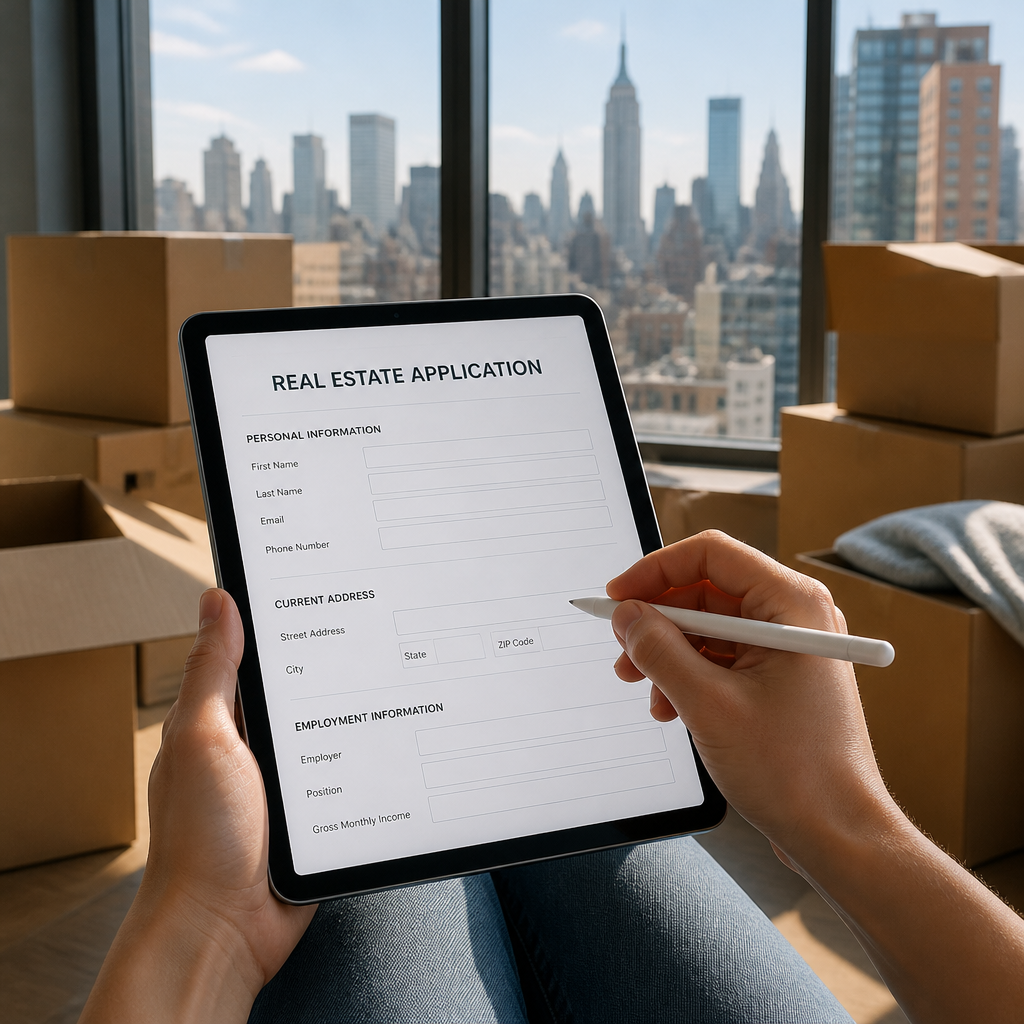
NYC rental applications are more demanding than most markets. Standard requirements include proof of income (typically 40 times the monthly rent in annual income), employment verification, bank statements, tax returns, reference letters, and a credit check. For co-op buildings, the requirements are even more extensive, often including a formal board interview. A relocation specialist prepares your application package in advance so that when the right apartment appears, you can submit the same day.
Stage 5: Negotiation and Lease Review
In a market with bidding wars, negotiation is not always about price. It can be about securing a longer lease term, getting a landlord to allow a sublet option, removing unusual clauses, or negotiating a free month on a longer commitment. A specialist who has completed dozens of lease negotiations knows where landlords will flex and where they will not. They also know which clauses in a standard NYC lease are actually non-standard additions worth pushing back on.
Off-Market Listings: The Advantage You Cannot Get Alone
This is the single clearest advantage a relocation specialist provides over a self-directed search. As of mid-2026, public rental inventory in NYC was down roughly 31% year over year, driven in part by structural market changes. A growing share of rentals, particularly in the better buildings and more desirable neighborhoods, circulate exclusively through broker networks before they reach any public portal. One broker who covers several buildings noted that roughly half of his summer 2026 leases would never appear on a major listing site.
When you rely only on public listings, you are competing for the apartments that everyone else can also see. Off-market access means you are often the first and only person considered for an apartment before competition even begins.
A specialist who has been working NYC rentals for years maintains relationships with building superintendents, property managers, and landlords directly. Those relationships produce early access, and early access in a fast market is often the difference between getting the apartment you want and settling for second choice.
Pro tip: When evaluating a relocation specialist, ask them directly what percentage of apartments they place clients in come from off-market or pre-market sources. A high number indicates genuine insider connections. A low number suggests they are primarily working the same public portals you could access yourself.
Neighborhood Matching: More Than a Map Search
Every NYC borough has neighborhoods that look appealing on paper and reveal their compromises in person. A relocation specialist's job is to give you an honest picture of both sides before you commit to a lease.
What Neighborhood Matching Actually Covers
Genuine neighborhood matching runs through a checklist that goes well beyond "close to a subway line." It accounts for the specific subway lines serving a neighborhood and whether they run express or local, the reliability of that service at the hours you will actually commute, proximity to grocery stores and pharmacies appropriate to your lifestyle, the age and condition of typical building stock in your price range, noise exposure from elevated trains, highways, or nightlife concentrations, and the realistic feel of the streets at different times of day and week.
For families, the school district question adds another layer of complexity that a specialist with borough experience can navigate directly. For remote workers, the question shifts to whether the neighborhood has the kind of daytime energy and cafe or coworking infrastructure that makes a work-from-home life functional.
Borough Comparisons at a Glance
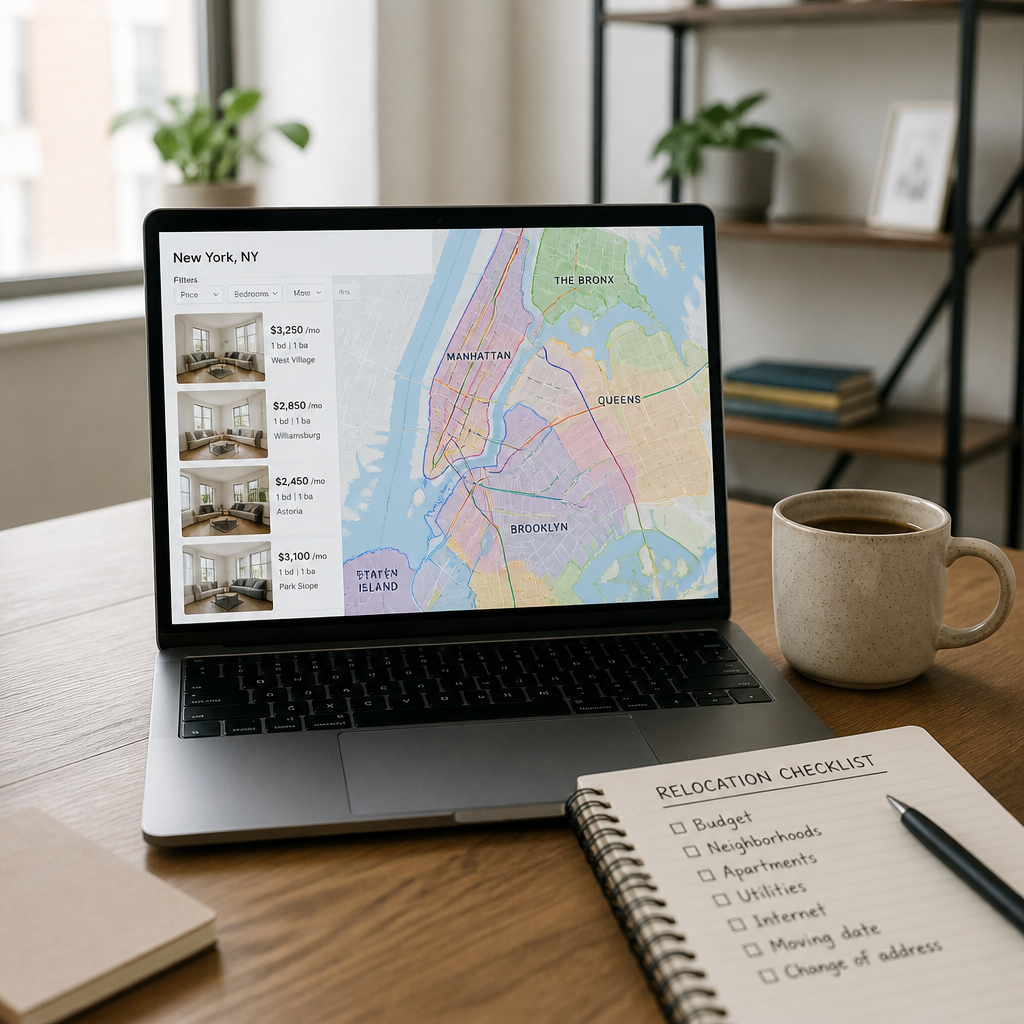
Manhattan remains the most expensive borough by a wide margin. The average Manhattan rent currently runs around $5,769, with studios at approximately $4,290 and two-bedrooms above $7,000. Brooklyn offers more variety, with median one-bedroom rents ranging from around $3,800 in Brooklyn Heights to roughly $4,000 in Williamsburg. Queens is the most underrated borough for value, with areas like Astoria offering one-bedrooms in the $2,200 to $3,200 range with roughly 25-minute commutes to Midtown. A specialist who works all five boroughs can calibrate your options across this full range rather than pushing you toward wherever they happen to have inventory.
Applications, Negotiations, and Lease Signing
The application stage is where unguided searches most frequently collapse. NYC landlords operate on a first-come, first-served logic when it comes to complete applications. A missing bank statement or an unsigned form can push your application to the back of the pile while another renter completes theirs. A relocation specialist handles this by preparing your full application package proactively, so there is no scrambling when the right apartment surfaces.
What a Strong Application Package Contains
At minimum, expect to provide two to three months of pay stubs or a signed employment offer letter, two to three months of bank statements, the most recent two years of tax returns, a credit authorization, and reference letters from a prior landlord and an employer or colleague. For co-op applications, add a personal financial statement and prepare for a board review process that can take several weeks. A specialist prepares templates and organizes these documents in advance, so you are never caught without a piece of the file.
Lease Clause Red Flags
Standard NYC leases are already detailed documents. But some landlords add non-standard clauses that restrict things like having guests for extended stays, making any modifications to the apartment at all, or require you to pay fees not mentioned in the listing. A relocation specialist who has reviewed hundreds of leases catches these quickly and knows which ones to accept, which to push back on, and which represent actual dealbreakers.
Relocation Approaches Compared
| Approach | What You Get | Practical Reality for NYC Movers |
|---|---|---|
| Self-directed search using public portals | Full control, no intermediary cost | Limited to publicly listed apartments. No help with applications, negotiation, or lease review. Requires in-person attendance at showings. Suitable only if you are already based in NYC and have time to search full-time. |
| General real estate agent (not a specialist) | Wider service scope including sales, purchases, and referrals | Uneven local knowledge, may not focus on the boroughs or price points you need, and often lacks the sustained broker relationships that produce off-market access. Variable quality. |
| Dedicated NYC relocation specialist | End-to-end guided process from consultation to lease signing | Access to off-market listings, neighborhood expertise across all five boroughs, application preparation, lease review, and negotiation support. Highest value for out-of-state and international movers on a timeline. |
Who Benefits Most from a NYC Relocation Specialist?
Not everyone moving to New York City needs a relocation specialist. If you already live in a nearby borough and have time to search at your own pace, a self-directed search can work. But for several categories of mover, the value of a specialist is not marginal. It is decisive.
Relocating Professionals on Corporate Timelines
When a job relocation gives you three weeks to find an apartment before your start date, the luxury of a leisurely search disappears. A specialist compresses the search timeline by running parallel tracks simultaneously: pulling listings, scheduling showings, preparing your application, and maintaining backup options if your first choice falls through. Companies that support employee relocations often work with specialists precisely because self-directed searches on tight timelines result in expensive temporary housing extensions.
Out-of-State Movers Without NYC Experience
If you have never rented in New York City, the gap between what you expect and what you encounter is significant. The income requirements, the application paperwork, the speed of the market, the building quality variation within a single neighborhood, the difference between a rent-stabilized and a market-rate apartment: all of it requires local knowledge to navigate correctly. A specialist translates the NYC market into a framework you can act on quickly and confidently.
Remote Workers Choosing Their Own Timeline
Remote workers have more flexibility in timing but often face the challenge of choosing a neighborhood without a fixed commute anchor. A specialist helps remote workers identify neighborhoods based on lifestyle priorities, daytime walkability, community feel, and access to shared working spaces, rather than defaulting to proximity to a transit hub they will rarely use.
International Movers
International relocations add documentation complexity, credit history challenges, and unfamiliarity with local market norms. Specialists who regularly handle international placements know which buildings accept alternative income verification, which landlords will accept a guarantor arrangement, and how to structure an application package that accounts for a non-US credit profile.
The FARE Act and What It Means for Your Costs
One of the most significant changes to the NYC rental market in recent years took effect on June 11, 2025. The Fairness in Apartment Rental Expenses Act, universally called the FARE Act, changed who is responsible for paying a broker's fee in New York City. Under the FARE Act, the party that hires a broker must pay that broker's fee. This means that if a landlord hires a broker to find a tenant, the landlord pays the fee, not you.
Before the FARE Act, NYC renters were paying an average of close to $13,000 to move into a new apartment, including broker fees that were often passed to tenants regardless of who hired the broker. That structure has changed. If you choose to hire your own tenant's representative, you pay their fee. If the landlord hired a broker, that cost now falls on the landlord.
This has produced an interesting market effect. Because landlords now bear broker costs, a growing share of apartments are being moved off public listings and managed through private broker networks, where the dynamics are different. This is exactly the environment where a relocation specialist's off-market access becomes more, not less, valuable. The apartments that never touch public portals are increasingly the best ones, and you only reach them through someone with the right relationships.
The FARE Act is enforced by the NYC Department of Consumer and Worker Protection. If a broker who represents a landlord attempts to charge you a fee, that is a violation of the law and can be reported through NYC 311.
Frequently Asked Questions
How much does a NYC relocation specialist cost?
The cost structure depends on whether you hire your own tenant's representative. Under the FARE Act, if you hire a specialist as your tenant's agent, you pay their fee directly, which is typically around one month's rent or a percentage of the annual rent. If the landlord hired the broker, you do not pay a broker fee. Many relocation services, including comprehensive apartment placement services, offer a free initial consultation and walk you through the exact cost structure before you commit to anything.
How long does the NYC apartment search process take with a specialist?
For most out-of-state movers working with a specialist, the active search phase runs two to four weeks from the initial consultation to a signed lease. The total timeline depends on your flexibility, your budget, and how quickly you can respond to opportunities. Tight corporate timelines can sometimes be compressed to under two weeks if the specialist is actively working the search and your application package is ready in advance.
What is the difference between a relocation specialist and a regular real estate agent?
A general real estate agent handles a wide range of transactions, including sales, purchases, and occasional rentals. A relocation specialist focuses specifically on placement, builds the borough relationships and off-market connections that come from doing this repeatedly, and structures their entire process around the logistical challenges of moving to NYC from elsewhere. The depth of local knowledge and the off-market access are the primary practical differences.
Can a NYC relocation specialist help if I have not visited the city yet?
Yes, and this is one of the clearest use cases for the service. Specialists regularly place clients who cannot visit New York before their move. They provide detailed video walkthroughs, honest neighborhood assessments, and remote application management. The process is specifically designed to work for out-of-state and international clients who need to make decisions at a distance.
What neighborhoods should I consider if I am moving to NYC for work?
The right neighborhood depends entirely on where you are working, how you plan to commute, and what your off-hours priorities are. For Midtown office workers, neighborhoods in Midtown West, the Upper West Side, or Long Island City in Queens offer a good balance of access and relative value. For Downtown workers, Brooklyn Heights, DUMBO, and the Financial District itself are worth considering. A relocation specialist maps your commute options before presenting a neighborhood shortlist, so the recommendation is built around your specific situation rather than generic popularity.
Does using a relocation specialist guarantee I will get the apartment I want?
No one can guarantee a specific apartment in a market this competitive. What a specialist guarantees is that your search is better informed, your application is stronger, your access to inventory is wider, and your negotiating position is more credible than it would be on your own. In practice, clients who work with experienced specialists find apartments that match their needs faster and with fewer painful surprises than those who search independently.
Are all five NYC boroughs covered by relocation specialists?
Not always. Some specialists focus primarily on Manhattan and parts of Brooklyn, which means clients with budget constraints or lifestyle preferences that point toward Queens, the Bronx, or Staten Island may get limited service. Before you work with any specialist, ask directly which boroughs they actively cover and how many placements they have made in the borough you are most interested in.
Have you worked with a NYC relocation specialist, or are you planning to make the move on your own? Share your experience or questions below.
References
- Manhattan average rent trends and current pricing data by apartment type
- NYC official guidance on the FARE Act and broker fee rules for tenants
- How the FARE Act is shifting NYC apartments toward off-market broker networks
- NYC rental market report covering Manhattan and Brooklyn rent increases and bidding wars
- Overview of what a relocation specialist does versus other apartment search options


Book your free
relocation inquiry
In 20 minutes, we'll understand your needs and create a personalized plan for your NYC move. No commitment, no pressure — just expert guidance.
+1 (917) 450-8909
Free 20-minute call
All 5 NYC Boroughs
Ready to make your
NYC move happen?
In 20 minutes, we'll understand your needs and create a personalized plan for your NYC move. No commitment, no pressure — just expert guidance.
.avif)