Best NYC Neighborhoods for Remote Workers in 2026

Most out-of-state remote workers arrive in New York City with the same plan: find a place near Midtown, absorb the energy, and figure out the rest later. That plan tends to collapse within a week. NYC is a city where your specific block matters more than your borough, and for remote workers, the stakes are even higher. Your apartment is also your office, your conference room, and your decompression zone. Choosing the wrong neighborhood doesn't just mean a longer commute you no longer take - it means paying Manhattan prices for an apartment that actively fights your productivity. This guide covers the best NYC neighborhoods for remote workers in 2026, with the kind of specificity that actually helps you decide.
Table of Contents
- Quick Takeaways
- What Remote Workers Actually Need from an NYC Neighborhood
- Top NYC Neighborhoods for Remote Workers
- Neighborhood Comparison Table
- How to Apartment Hunt as a Remote Worker in NYC
- Work-From-Home NYC: Building Features Worth Paying For
- Frequently Asked Questions
- References
Quick Takeaways
| Key Insight | Explanation |
|---|---|
| Apartment size matters more than location prestige | Remote workers need a dedicated work area. A 450 sq ft studio in a "hot" neighborhood is harder to work from than a 700 sq ft one-bedroom in a quieter area. |
| Outer-borough neighborhoods offer the best value per square foot | Neighborhoods like Astoria, Long Island City, and Park Slope give remote workers more room, lower rents, and genuine community feel compared to central Manhattan. |
| Café culture is a real productivity tool | NYC has over 310 certified laptop-friendly venues. Williamsburg, Greenwich Village, and Astoria have dense concentrations of quality, remote-worker-friendly cafés. |
| Internet reliability should be on your checklist | Older pre-war buildings in parts of Manhattan can have inconsistent broadband. Newer construction in LIC, Williamsburg, and Greenpoint tends to offer more reliable fiber infrastructure. |
| Coworking proximity reduces isolation | Neighborhoods with walkable coworking spaces give remote workers a fallback when Zoom calls require a quiet, professional-grade environment. |
| Your schedule dictates your ideal neighborhood | If you have occasional in-person obligations, neighborhoods with easy subway or ferry access to Midtown or Lower Manhattan protect your time without Manhattan pricing. |
| Off-market listings matter in competitive neighborhoods | The apartments best suited for remote work, those with dedicated alcoves, extra rooms, or home-office nooks, often don't appear on public listing sites. |
What Remote Workers Actually Need from an NYC Neighborhood
The question is not just "which neighborhoods are nice." The question is which neighborhoods support a specific working life. Remote workers using NYC as a base have a different checklist than commuters, and ignoring that leads to expensive regret.
First, square footage. NYC's median apartment is small by any national standard, and a dedicated workspace inside your apartment requires intentional unit selection. An alcove studio, a flex one-bedroom, or a true two-bedroom changes everything. Second, ambient noise. Some of the city's most celebrated neighborhoods, the East Village, the Lower East Side, parts of Williamsburg's main corridors, are genuinely disruptive during daytime hours. Third, walkable infrastructure: coffee shops with reliable WiFi, coworking spaces for client calls, green space for midday resets.
Pro tip: Before signing a lease in any NYC neighborhood, visit on a Tuesday at 10am. That's when the street-level noise, construction activity, and daytime crowd density closest to your actual working hours will be visible.
The right NYC neighborhood for a remote worker is one where the apartment is large enough to separate work and rest, the street is quiet enough to concentrate, and the block has enough life to prevent isolation. Those three things rarely appear in the same listing description - which is why knowing where to look is everything.
Top NYC Neighborhoods for Remote Workers
These neighborhoods consistently come up as strong fits for people doing serious work-from-home life in New York City. Each one has a distinct profile, and the right choice depends on your priorities.
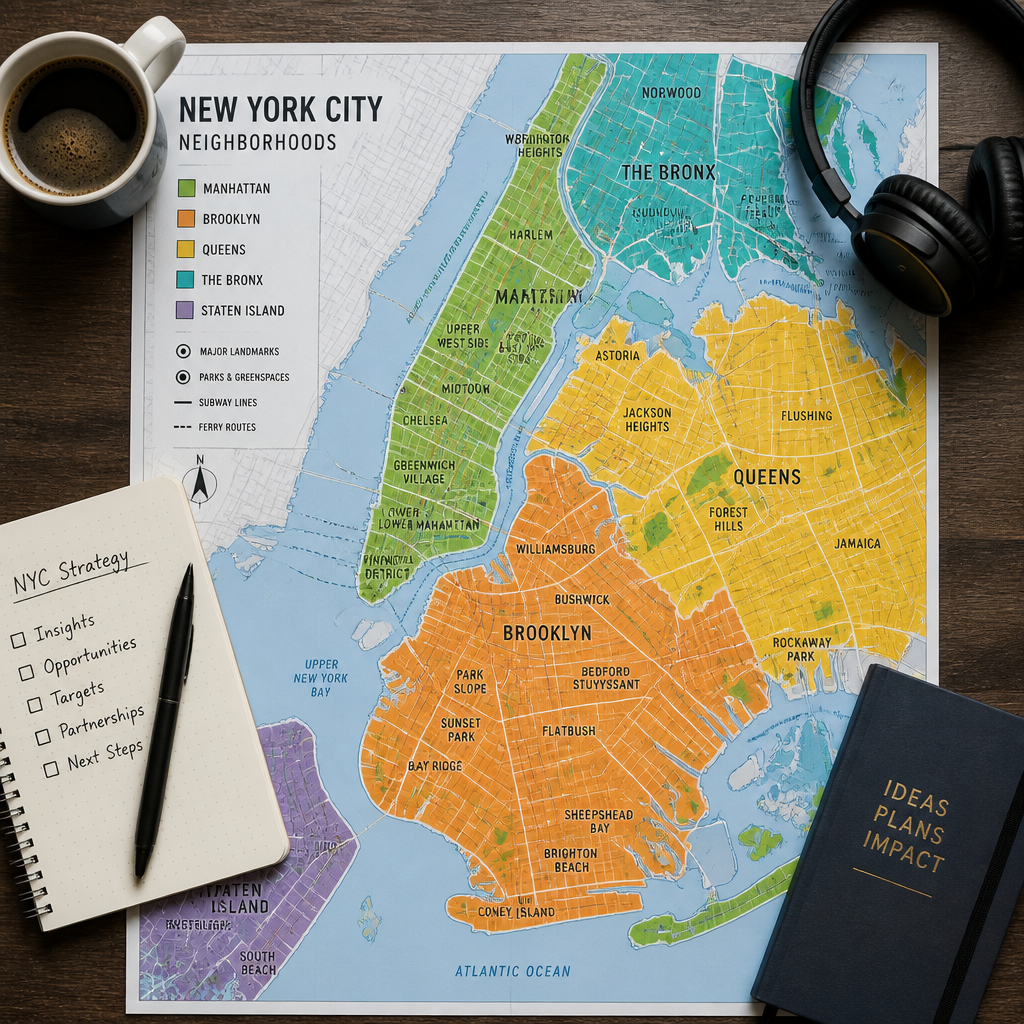
Park Slope, Brooklyn
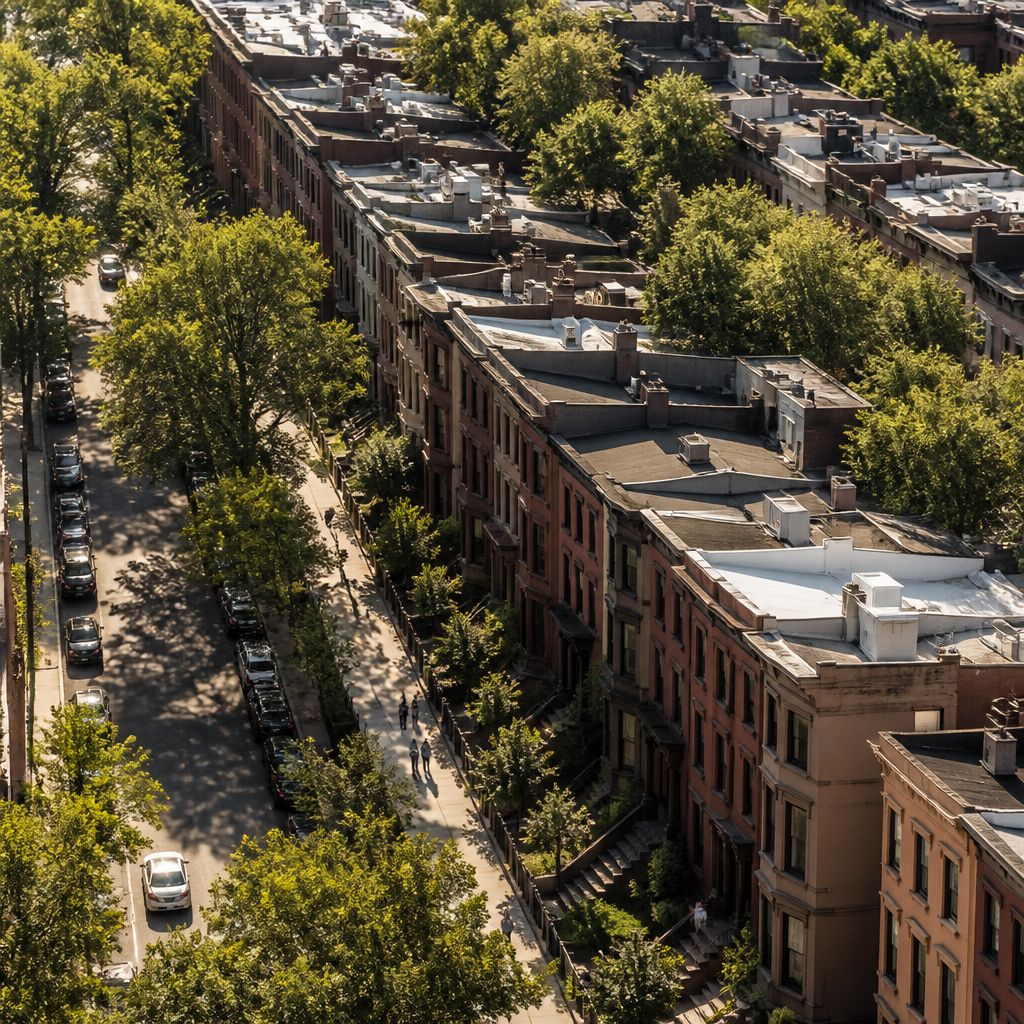
Park Slope is genuinely one of the most livable neighborhoods in the five boroughs. Tree-lined streets, historic brownstones, and a daytime street scene that's active but not chaotic make it a strong fit for remote professionals who want a real neighborhood feel. The housing stock tends toward larger units, which helps with dedicated home office setups. Proximity to Prospect Park is a practical benefit: a 45-minute midday walk through the park is a legitimate productivity reset, not a luxury.
The coworking and café scene is solid without being overwhelming. You'll find reliable spots to work on days when you need a change of environment. The 2/3 and B/Q subway lines connect quickly to Manhattan when occasional in-person meetings arise. Rents run higher than outer Queens but are generally below comparable Manhattan neighborhoods.
Astoria, Queens
Astoria has become one of the most consistently recommended neighborhoods for remote workers who want space, culture, and relatively manageable rents. The food scene is exceptional, the streets are walkable, and the 30th Avenue corridor offers a mix of cafés and coworking options that support a flexible working day. Rents remain more accessible than Brooklyn's prime spots, and apartment sizes in Astoria's pre-war and mid-century buildings tend to be generous compared to equivalent price points in Manhattan.
The N/W subway lines connect Astoria to Midtown Manhattan in roughly 20 to 30 minutes, which matters if your remote arrangement involves occasional office days. The neighborhood also has a strong community character that prevents the isolation that can come with full-time remote work in a large city.
Pro tip: In Astoria, the blocks east of 31st Street and north of Astoria Boulevard tend to have quieter street-level noise than the main commercial strips, making them better for daytime working from home. Ask specifically about upper-floor units in these blocks when searching.
Williamsburg, Brooklyn
Williamsburg is not the cheapest option, but it may be the most purpose-built neighborhood in NYC for a certain type of remote worker: those in creative fields, tech, or media who want to work from a city that matches their professional identity. The café culture here is exceptional, with specialty coffee roasters like SEY Coffee operating in minimal, airy spaces designed for lingering productivity. Premium coworking facilities including Mindspace Williamsburg at 25 Kent Avenue on the Brooklyn waterfront offer high-spec alternatives when home gets limiting.
The L train provides fast access to Manhattan's West Side, and the Williamsburg Bridge is bikeable. The tradeoff is price and noise: main-corridor apartments on Bedford Avenue and Metropolitan Avenue can be disruptively loud. The best remote-work apartments in Williamsburg are on the side streets, in newer construction buildings that tend to offer better soundproofing and more reliable internet infrastructure.
Long Island City, Queens
Long Island City offers the shortest outer-borough commute into Manhattan of any Queens neighborhood. For remote workers with hybrid arrangements that require periodic Midtown or Downtown presence, that matters enormously. LIC has seen significant residential development in recent years, which means the housing stock includes newer buildings with the kinds of amenities, dedicated coworking lounges, fast fiber internet, Zoom rooms, and package concierge services, that remote workers actually use.
The lifestyle in LIC is less fully formed than Park Slope or Astoria, with the street-level culture existing in pockets rather than saturating the neighborhood. But for remote workers who prioritize function and Manhattan proximity over neighborhood immersion, it's one of the most practical choices available at its price point.
Greenpoint, Brooklyn
Greenpoint sits at the northern tip of Brooklyn and has developed a reputation as the neighborhood where people who want Williamsburg's quality of life go when Williamsburg's rents stop making sense. The café culture is strong, the streets are quieter than Williamsburg's main corridors, and the housing stock includes a mix of apartment types that can accommodate home office setups. Greenpoint residents are notably more likely to work from home or spend daytime hours in the neighborhood, which shapes the local infrastructure accordingly.
The G train is the primary subway line, which some people find limiting for Manhattan access. The East River Ferry provides an alternative route. Bike lanes on Manhattan Avenue and Franklin Street make cycling viable for residents who need occasional in-person access to South Brooklyn or Lower Manhattan.
Harlem, Manhattan
Harlem, particularly West Harlem, has emerged as one of the more compelling options for remote workers who want Manhattan's energy and infrastructure without Manhattan's most extreme rental prices. The neighborhood has genuine vibrancy, a growing café and restaurant scene, and access to Riverside Park and Morningside Park for outdoor work breaks. The 1/2/3/A/C/B/D subway lines provide some of the best transit connectivity in the city, which is valuable for remote workers with occasional in-person obligations anywhere in the borough.
Apartment sizes in Harlem tend to be larger than in Midtown or the West Village at equivalent price points, which directly supports home office setups. The creative and intellectual community that has historically defined the neighborhood continues to shape it, making daytime working hours feel socially comfortable rather than isolated.
Neighborhood Comparison Table
Every neighborhood on this list serves a different remote worker profile. Here is a direct comparison across the three criteria that matter most for work-from-home life in NYC.
| Neighborhood | Best For | Key Trade-Off |
|---|---|---|
| Park Slope, Brooklyn | Families, professionals wanting space and calm; dedicated home office setups; Prospect Park access for daily outdoor breaks | Higher rents than outer Queens; streets can feel quiet to the point of dullness for single remote workers |
| Astoria, Queens | Budget-conscious remote workers wanting space, culture, and community; best overall value for WFH lifestyle in 2026 | Not as close to Manhattan as LIC; the N/W trains can be crowded during rush periods on hybrid workdays |
| Williamsburg, Brooklyn | Creative and tech remote workers who want premium café infrastructure, coworking access, and strong professional community | Main-corridor apartments are noisy; pricing at or above Park Slope in many cases |
| Long Island City, Queens | Hybrid workers with frequent Manhattan obligations; those who prioritize modern building amenities and shortest outer-borough commute | Neighborhood lifestyle exists in pockets; less walkable café and street culture than Brooklyn equivalents |
| Greenpoint, Brooklyn | Remote workers wanting Williamsburg quality at slightly lower prices; good for those who work from cafés most of the day | G train only limits Manhattan access; rents have risen significantly in recent years |
| Harlem, Manhattan | Manhattan loyalists who need full-borough access; those who want larger apartments at Manhattan addresses without Midtown pricing | Some blocks have more street noise and foot traffic than outer-borough equivalents; pre-war buildings can have older broadband infrastructure |
How to Apartment Hunt as a Remote Worker in NYC
Apartment hunting in NYC as a remote worker requires a different set of questions than standard apartment hunting. The failure mode is treating the search the same way a commuter would, optimizing for transit access and price per square foot while ignoring the dozen factors that actually affect your daily working life.
Ask About Daytime Noise Before You Ask About Anything Else
Most apartments in NYC are shown on evenings or weekends, when street-level noise is different from working hours. Construction sites, school dismissal patterns, delivery truck routes, and restaurant exhaust fan schedules all operate on weekday daytime rhythms that you will never observe during a standard apartment showing. A common mistake is signing a lease based on a Saturday afternoon visit and discovering on the first Monday that the building sits next to a loading dock.
Always request a weekday daytime visit, or at minimum ask the listing agent or current tenant directly about working hours. Questions worth asking: Does morning truck traffic run on this block? Is there an HVAC or mechanical system that runs during business hours? Are there school or daycare facilities nearby that create afternoon noise spikes?
Treat Square Footage and Layout as Non-Negotiable
For a remote worker, the apartment that "works" is the one where you can close a door, or at minimum create a visual separation between your desk and your couch. A true two-bedroom at a stretch in your budget is almost always better than a studio in a marginally more exciting neighborhood. Flex apartments, units marketed as convertible or with open alcoves, can work if the math is right, but require seeing the actual conversion potential in person, not in a listing photo.
NYC applications require strong documentation regardless of your income source. Remote workers with non-W2 income should prepare tax returns, bank statements, and employer letters verifying remote status before beginning the search, not after finding the right apartment. NYC landlords typically require annual income of 40 to 45 times the monthly rent, and they will apply that standard to variable or self-employed income with additional scrutiny.
Use Insider Access to Find the Right Units
The apartments that best serve remote workers, those with home-office alcoves, extra rooms, or genuinely quiet layouts, are often not on public listing platforms. Building owners and management companies with established relationships sometimes place these units off-market before they ever appear on StreetEasy or Zillow. Working with a relocation specialist who has direct connections to those channels is not a luxury for remote workers; it is the most efficient path to apartments that actually match a non-standard set of requirements.
Pro tip: When evaluating any NYC apartment as a remote worker, bring a portable WiFi speed-testing device or use your phone to run a speed test in each room. Thick pre-war walls and internal apartment configurations can create dead zones that a landlord is not obligated to disclose.
Work-From-Home NYC: Building Features Worth Paying For
The gap between a building that supports remote work and one that fights it has grown significantly as more residential developers have incorporated purpose-built amenities. These features are worth paying a modest rent premium for because they directly affect your productivity and your lease term experience.
Building-Level Coworking Lounges and Zoom Rooms
A growing number of newer NYC residential buildings now include dedicated coworking lounges, conference rooms bookable by residents, and private phone booths. These are not marketing features - for a remote worker whose apartment is a studio or one-bedroom, a building-level Zoom room eliminates the awkwardness of professional video calls from a kitchen background. Neighborhoods with the highest concentration of new construction offering these features include Long Island City, Williamsburg's waterfront developments, and parts of Harlem near 125th Street.
Fiber Internet Infrastructure
Older pre-war buildings in parts of Manhattan and Brooklyn can have broadband infrastructure that limits connection speeds or creates reliability issues. Newer residential buildings in LIC, Greenpoint, and Williamsburg's waterfront corridor tend to have fiber-optic infrastructure that supports consistent high-speed connections. When viewing an apartment, asking specifically about the building's internet provider options, not just what the current tenant uses, is the right question. A building locked to a single slow provider is a real problem for a remote worker.
Outdoor Space and Green Access
This gets underweighted in apartment searches and overweighted in marketing copy. What actually matters for work-from-home life is proximate, low-friction outdoor access: a park or green space you can reach in under five minutes for a midday break. Prospect Park for Park Slope, Astoria Park for Astoria, Riverside Park for upper West Harlem, and the East River waterfront for Long Island City and Greenpoint all serve this function. A building with a roof deck is a bonus; a neighborhood with a real park is essential.
Frequently Asked Questions
Which NYC borough is best for remote workers overall?
Brooklyn offers the best overall combination of apartment size, neighborhood culture, café infrastructure, and transit access for most remote workers. Neighborhoods like Park Slope, Williamsburg, and Greenpoint consistently rank well because they support both productive daytime working and active off-hours life. Queens, particularly Astoria and Long Island City, is the better answer if budget is the primary constraint.
Is it worth paying more to live in Manhattan as a remote worker?
It depends on the neighborhood within Manhattan. Harlem and Washington Heights offer Manhattan addresses with more space per dollar than Midtown or the West Village. Living in central or lower Manhattan as a full-time remote worker means paying a premium for transit proximity you rarely use, which rarely makes financial sense. If your role requires frequent in-person presence, Manhattan's premium may be justified. If it does not, the outer-borough options almost always deliver a better working environment per dollar spent.
What should remote workers look for in an NYC apartment listing?
Look for listings that describe a home office, alcove, flex layout, or extra room explicitly. Filter for one-bedrooms and two-bedrooms rather than studios unless the floor plan clearly shows a separated work area. Pay close attention to floor and building-side information: high floors and rear-facing units in any neighborhood eliminate most street-level noise concerns. Avoid ground-floor or parlor-level units unless the listing explicitly notes soundproofing.
How competitive is the NYC rental market for remote workers in 2026?
NYC's rental market remains highly competitive, particularly for the larger units that remote workers need. Well-priced apartments in desirable neighborhoods, especially those with home-office-compatible layouts, move very quickly. Having all documentation prepared, including income verification, tax returns, and any guarantor arrangements, before you begin viewing apartments is not optional. Hesitation between a viewing and an application often means losing the unit to a faster-moving applicant.
Can a relocation service help remote workers find better apartments than searching independently?
Yes, and the difference is most pronounced precisely for remote workers. A specialist with deep neighborhood knowledge and off-market access can identify apartments with the specific layout, building amenities, and daytime-noise profile that a remote worker needs, criteria that don't appear in standard listing search filters. For someone relocating from out of state who cannot spend weeks visiting dozens of apartments in person, that access and filtering function is the most efficient path to the right unit.
What neighborhoods should remote workers avoid in NYC?
The neighborhoods to be cautious about are not necessarily bad neighborhoods. They are neighborhoods where the daytime character is disruptive to focused work: heavily commercial corridors, blocks with high construction density, or areas where small apartments dominate the housing stock. Parts of Midtown, the Lower East Side's main strips, and some sections of the East Village have high daytime noise and small average apartment sizes that work against the remote-worker setup. That doesn't mean no good apartments exist there, just that finding the right one requires more precision.
How does relocating to NYC for remote work differ from relocating for an office job?
The priorities flip. A commuter optimizes for transit access and accepts smaller apartments or higher noise levels as the cost of proximity. A remote worker needs to optimize for the apartment itself and the neighborhood's daytime character, with transit as a secondary consideration. This means the set of neighborhoods that make sense widens considerably, and outer-borough options that would be impractical for daily commuters become genuinely excellent choices. The search strategy, the questions to ask, and the neighborhoods worth prioritizing are all different.
If you're currently planning a remote-work relocation to New York City, we'd love to hear which neighborhoods you're considering and what's driving your priorities - share your thoughts or questions in the comments.
References
- NYC neighborhoods for remote workers and digital nomads: a local realtor's 2025 guide
- Comprehensive research on New York City's remote work scene and best neighborhoods for digital nomads, updated 2025
- Greenpoint vs. Long Island City: neighborhood comparison for buyers and remote workers
- How remote work is shaping NYC apartment demand and building amenities
- Best coworking spaces in New York City, including Brooklyn waterfront options
Book your free
relocation inquiry
In 20 minutes, we'll understand your needs and create a personalized plan for your NYC move. No commitment, no pressure — just expert guidance.
+1 (917) 450-8909
Free 20-minute call
All 5 NYC Boroughs
Ready to make your
NYC move happen?
In 20 minutes, we'll understand your needs and create a personalized plan for your NYC move. No commitment, no pressure — just expert guidance.
.avif)