Cobble Hill NYC Neighborhood Guide: Rent & Lifestyle

If you are searching for an NYC neighborhood that combines genuine Brooklyn character with a realistic shot at a relatively quiet street and a tree canopy that actually exists, Cobble Hill keeps appearing at the top of every shortlist. Yet most online guides skim the surface: pretty brownstones, good restaurants, end of story. This Cobble Hill NYC neighborhood guide goes deeper, covering current rent ranges, subway realities, lifestyle tradeoffs, and the insider context that out-of-state movers need before they sign a lease in one of Brooklyn's most competitive zip codes.
Table of Contents
- Quick Takeaways
- What Makes Cobble Hill Different
- Cobble Hill Rent in 2026: What You Will Actually Pay
- Commute and Transit: The Honest Picture
- Lifestyle, Dining, and Parks
- Cobble Hill vs. Neighboring Neighborhoods
- Who Cobble Hill Actually Suits
- Frequently Asked Questions
- References
Quick Takeaways
| Key Insight | Explanation |
|---|---|
| Average rent is well above Brooklyn median | Expect to pay roughly $3,900 for a one-bedroom and around $4,283 average across all unit types, per current listing data. Budget accordingly before you fall in love. |
| The F and G trains are your primary subway options | Bergen Street (F/G) is the most walkable station for most Cobble Hill addresses. The 2/3/4/5 at Borough Hall adds flexibility but requires a longer walk. |
| Historic district rules limit new construction | The Cobble Hill Historic District covers roughly 60 acres and 796 contributing buildings. High-rises are essentially absent, which keeps the streetscape intact but shrinks inventory. |
| Walkability is genuinely excellent | Court Street and Atlantic Avenue carry most of the daily errands on foot. You can realistically skip the subway for a typical Saturday entirely. |
| Off-market listings matter here more than most places | Because inventory turns quietly in a tight brownstone block, units that never hit StreetEasy are common. Insider connections move people into Cobble Hill faster than public search alone. |
| Families and young professionals coexist without tension | Unlike some Brooklyn neighborhoods that tilt hard one way, Cobble Hill's mix of strollers and professionals sharing the same coffee shop is genuine and stable. |
| The premium is real but defensible | Compared to adjacent Carroll Gardens or Boerum Hill, Cobble Hill commands higher rents. The tradeoff is a quieter, more landmarked block and very low crime figures from the 76th Precinct. |
What Makes Cobble Hill Different
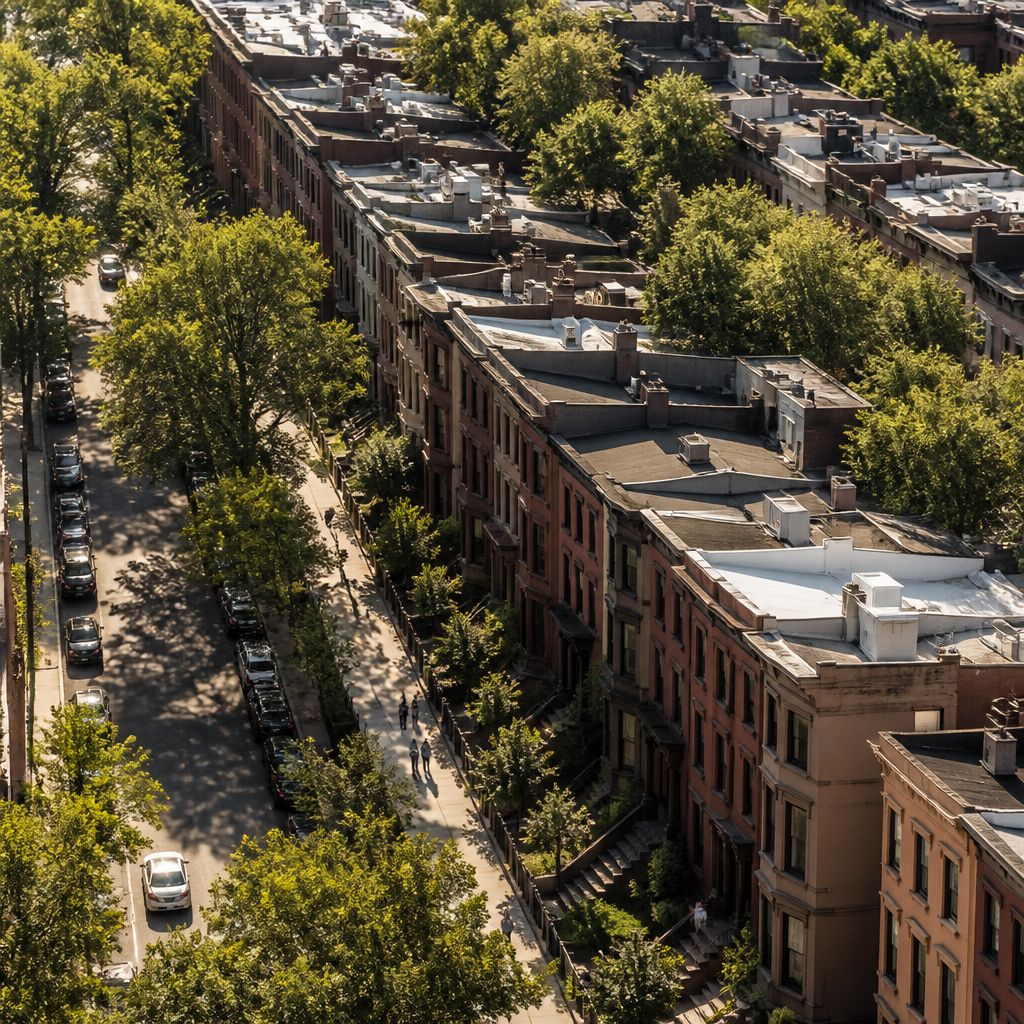
Most Brooklyn neighborhoods describe themselves as "charming." Cobble Hill earns it through legal protection. The Cobble Hill Historic District was designated a New York City Landmark in 1969 and added to the National Register of Historic Places in 1976. The district spans approximately 60 acres and contains 796 contributing buildings constructed between the 1830s and the 1920s, ranging in style from Greek Revival and Italianate to Queen Anne rowhouses. That legal framework is why you are not looking at a glass tower when you walk down Kane Street.
Roughly bounded by Atlantic Avenue to the north, Court Street to the east, Degraw Street to the south, and Hicks Street to the west, the neighborhood is compact and walkable by design. To the north sits Brooklyn Heights, to the east Boerum Hill, to the south Carroll Gardens, and to the west the Columbia Street Waterfront District. That geography matters: each bordering neighborhood has its own subway access, its own restaurant strip, and its own rental price point, and understanding those borders helps you decide exactly where on a block to search.
What distinguishes Cobble Hill from more transitional Brooklyn neighborhoods is stability. Large-scale high-rise development is essentially nonexistent here, which preserves the intimate scale of the streets and keeps residents who have lived in the same building for years. That continuity creates a social texture that newer, high-turnover buildings simply do not replicate.
"It's an idyllic, residential neighborhood with a lot of landmarked areas. Just stunning historic buildings with a lot of details and streets with rowhouses. It's a very coveted neighborhood to live in, so you're going to pay a premium for that."
Pro tip: If you want the Cobble Hill aesthetic at a slightly lower price, the blocks closest to Boerum Hill on the eastern edge sometimes list at a modest discount compared to the Clinton Street and Hicks Street corridors. That discount is real but small, typically a few hundred dollars a month on a one-bedroom.
Cobble Hill Rent in 2026: What You Will Actually Pay
Cobble Hill apartments are priced at a consistent premium, and current listing data confirms what anyone who has searched here already suspects. The average rent across all unit types in the neighborhood runs around $4,283 per month, according to RentCafe. One-bedroom apartments list at roughly $3,900 per month based on Apartment List data. Studio units on platforms like Apartments.com average around $2,173, though genuinely affordable studios in the historic district are rare and move fast. Two-bedroom units frequently exceed $5,000 per month.
What the Price Buys You
In Cobble Hill, the rent goes toward a specific product: a pre-war brownstone unit, often with original plaster details, hardwood floors, and high ceilings, on a tree-lined block that looks the same as it did decades ago. Layouts in multi-unit brownstones tend to be longer and narrower than Manhattan equivalents, with kitchens toward the back. Garden-level units with private outdoor space command a significant premium and are frequently not advertised publicly.
The housing stock is predominantly multi-unit brownstones, with the occasional converted carriage house and a limited number of larger condo or co-op buildings near the Atlantic Avenue edge. Unlike parts of Carroll Gardens or Boerum Hill, you will rarely find a brand-new construction rental in the core historic district. That means fewer amenities like doormen, gyms, or in-unit laundry in many older buildings, though renovated units increasingly include washer-dryer hookups.
Budgeting Honestly for a Cobble Hill Move
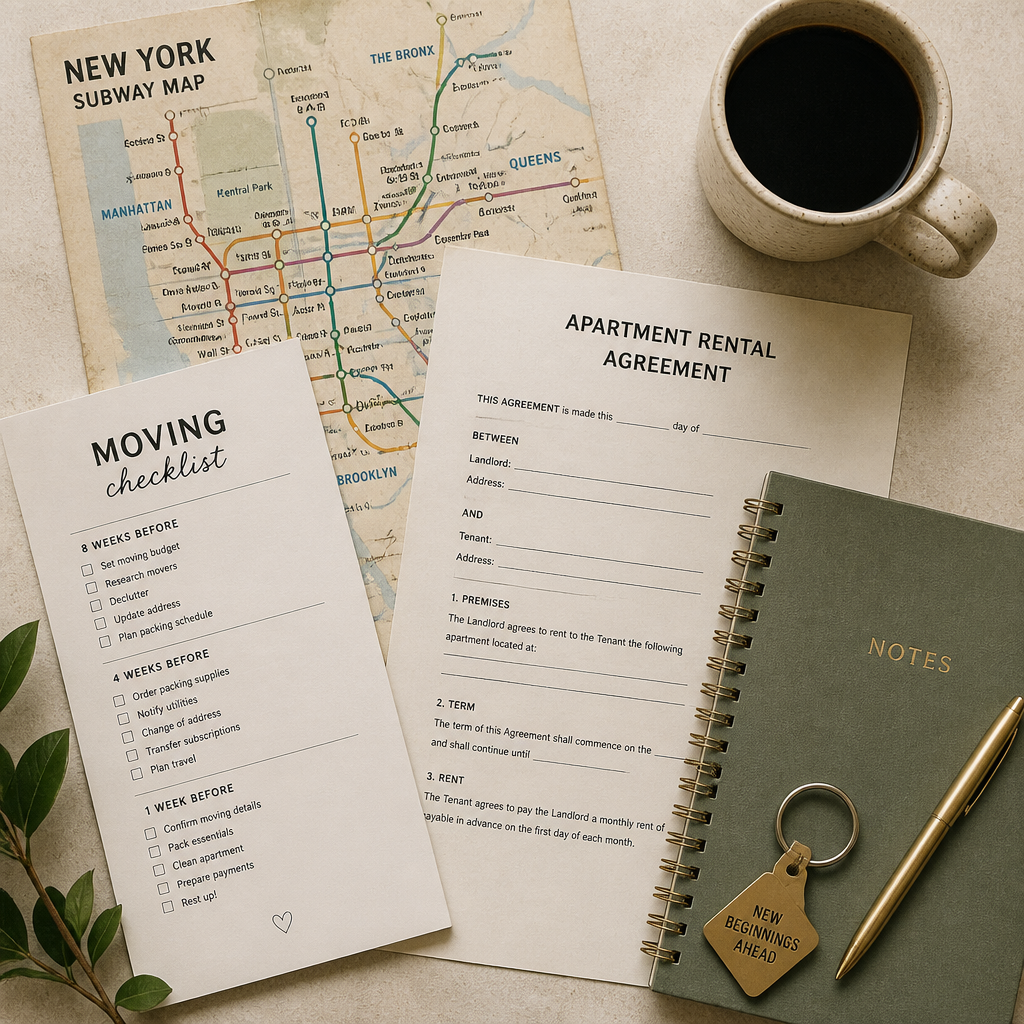
NYC landlords typically require proof of annual income equal to 40 to 45 times the monthly rent. On a $3,900 one-bedroom, that means demonstrating roughly $156,000 to $175,500 in annual income. Out-of-state movers who are starting a new job should have an employment offer letter ready and should expect to put forward a guarantor or additional months of security deposit if their first paycheck has not yet arrived. This is a standard hurdle across competitive Brooklyn neighborhoods, but it catches many relocating professionals off guard.
Pro tip: In Cobble Hill specifically, a significant share of desirable rentals are held by individual landlords who own one or two brownstones. These landlords rarely post on major aggregator sites. A relocation specialist with active relationships in the neighborhood can surface these units before they ever appear online, which is how many of the best apartments get filled.
Commute and Transit: The Honest Picture
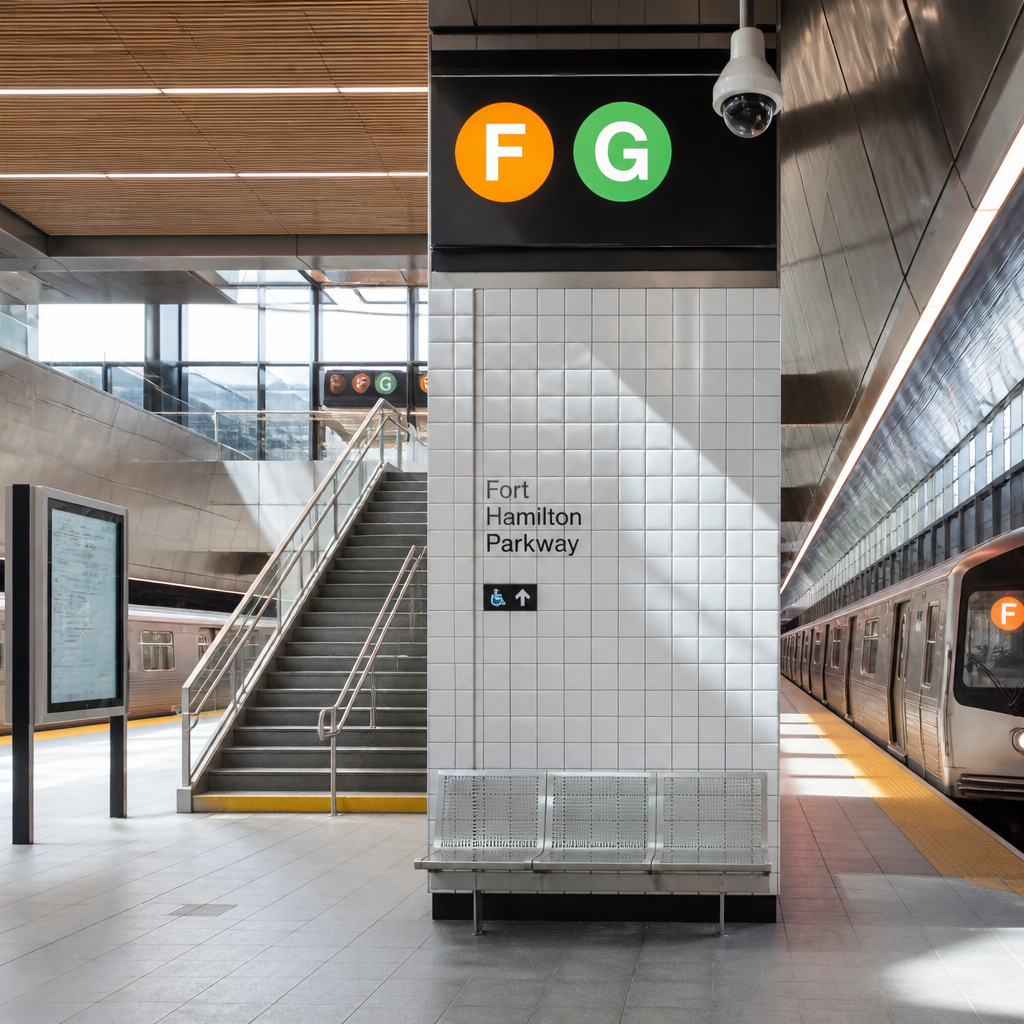
The transit situation in Cobble Hill is genuinely good but requires knowing which station to target from which block. The F and G trains at Bergen Street serve the majority of Cobble Hill addresses and represent the most convenient option for most residents. Separately, the 2, 3, 4, and 5 trains at Borough Hall and the A and C trains at Hoyt-Schermerhorn are accessible with a longer walk, typically seven to ten minutes depending on your exact block.
Commute Times to Key Destinations
Based on verified transit data, commute estimates from Cobble Hill run as follows: Downtown Brooklyn is roughly 1.1 miles away, reachable in about 15 to 20 minutes by transit or 10 minutes by bike. Wall Street in Lower Manhattan is approximately 3.3 miles, taking around 25 minutes by subway. Rockefeller Center in Midtown runs about 6.6 miles, with transit times around 35 minutes. Jersey City is approximately 9.8 miles and takes 45 to 55 minutes by transit depending on the route.
Bus routes on Court Street and Atlantic Avenue provide surface transit options that are especially useful for reaching areas the F and G do not directly serve. Cyclists have reasonable infrastructure for Brooklyn Bridge Park and waterfront routes. The neighborhood's compact size and flat terrain make biking a practical everyday mode for many residents.
One Honest Transit Caveat
The F train is the primary artery, and it has a well-documented history of delays and service gaps, particularly in the evenings and on weekends. If your daily commute depends on a specific departure window, this matters. The 2/3 trains at Borough Hall are generally more reliable, and residents whose blocks fall within reasonable walking distance of that station often prefer it for time-sensitive trips. Factor this into your block selection, not just your neighborhood selection.
Lifestyle, Dining, and Parks
Cobble Hill's lifestyle pitch is specific: a low-rise, community-oriented neighborhood where the daily rhythm includes a walk to a coffee shop, time in a small park, and dinner within a few blocks. That pitch is accurate. Court Street is the main commercial spine, lined with independent restaurants, cafes, a wine shop, and the historic Cobble Hill Cinemas. Henry Street carries a quieter stretch of boutiques and cafes. Atlantic Avenue, the northern boundary, offers a broader range of dining including Middle Eastern restaurants that have been anchoring that corridor for years.
Parks and Outdoor Life
Cobble Hill Park, tucked between Clinton and Court Streets on Congress, is the neighborhood's central gathering point. It functions as the town square: a well-maintained green space with seating, a classic sandbox and climbing structures for children, and a regulars population of dog walkers and parents that gives the neighborhood its small-town texture. The Blue and Yellow Playground on Henry Street adds another family-friendly outdoor option within a short walk.
Brooklyn Bridge Park is accessible on foot or by bike from Cobble Hill's western side, giving residents access to one of the most significant public waterfront spaces in the entire city. That proximity is a genuine lifestyle amenity that many comparable Brooklyn neighborhoods do not share.
The Dining and Coffee Reality
The food scene ranges from longstanding neighborhood standbys to newer openings that reflect the national profile the area has developed. Cafes like Fare and Folk on Henry Street serve as neighborhood gathering spots. Yemen Cafe and La Vara represent the range from casual and inexpensive to polished Spanish tapas. The neighborhood is not a destination dining hub in the way that Carroll Gardens has become for Italian-American food, but it is more than sufficient for daily life and has a strong local-first character. A weekly farmers market reinforces that pattern.
Cobble Hill vs. Neighboring Neighborhoods
Relocating professionals frequently ask whether Cobble Hill is worth the premium over Carroll Gardens, Boerum Hill, or even Brooklyn Heights. The comparison depends entirely on what you are optimizing for. Here is a direct comparison across the factors that matter most to renters.
| Factor | Cobble Hill | Carroll Gardens | Boerum Hill |
|---|---|---|---|
| Approximate 1BR Rent | ~$3,900/month | Slightly lower on average | Comparable, slightly lower |
| Housing Stock | Predominantly landmarked brownstones, very limited new construction | Mix of brownstones and some newer buildings, more variety | Mix of brownstones and mid-century buildings, some newer rentals |
| Primary Subway Access | F/G at Bergen Street, 2/3/4/5 at Borough Hall (longer walk) | F/G at Smith-9th or Carroll Street, longer walk to express trains | F/G at Bergen Street, A/C at Hoyt-Schermerhorn, closer to express |
| Street Quiet / Residential Feel | Very quiet residential blocks, minimal through traffic | Quiet but more commercial activity on Smith Street | More urban noise near Atlantic Avenue, busier feel |
| Family-Friendliness | High. Strong school options, multiple parks, low crime | High. Strong Italian-American community feel, good parks | Moderate. More singles-oriented but families present |
| Off-Market Listing Volume | High. Individual landlords dominate the brownstone stock | Moderate. More managed buildings with standard listings | Moderate. Mix of individual and managed inventory |
The honest conclusion: if your priority is the quietest, most architecturally protected block in South Brooklyn with good transit access, Cobble Hill justifies its premium. If you want a slightly lower rent and more restaurant variety within walking distance, Carroll Gardens or Boerum Hill are reasonable alternatives. Brooklyn Heights, immediately to the north, is generally more expensive and skews toward a longer-established resident demographic.
Who Cobble Hill Actually Suits
Not every relocating professional is a good match for Cobble Hill, and knowing this saves time. The neighborhood suits people who are willing to pay for calm and architectural character, who work in Lower Manhattan, Downtown Brooklyn, or anywhere accessible by the F or 2/3 lines, and who want the feel of a residential community rather than a live-work-party district. It is consistently cited as one of the city's best neighborhoods for young families precisely because the streets are quiet, the parks are maintained, and the 76th Precinct routinely reports low crime figures.
Cobble Hill is less ideal for people who need late-night transit flexibility (the G train is notoriously infrequent after midnight), who prioritize subway proximity above walkability, or who want a building with full amenities like a doorman, roof deck, or gym. Those renters will find better value in the newer stock available in parts of Downtown Brooklyn, Long Island City, or even adjacent Boerum Hill near the Atlantic Avenue corridor.
For out-of-state movers arriving in NYC for the first time, the Cobble Hill search has one specific danger: the best units in this neighborhood do not stay listed long, and they are frequently never listed publicly at all. A relocating professional who plans to search from a hotel for two weeks will routinely lose units to applicants who applied before the online listing even went live. Working with a specialist who has active contacts with Cobble Hill's individual brownstone landlords is not a luxury here. It is the most practical way to see the actual inventory.
Pro tip: Start your Cobble Hill search with a clear sense of which subway station you are anchoring to: Bergen Street for the F/G or Borough Hall for express trains. That decision should drive your block selection, because in this neighborhood a six-block difference in location can meaningfully change your commute and your rent, sometimes in the same direction.
Frequently Asked Questions
Is Cobble Hill Brooklyn safe?
Yes, by any reasonable measure. The 76th Precinct, which covers Cobble Hill, consistently reports low crime figures, and residents frequently note feeling comfortable walking the neighborhood's blocks at night. The historic district's intact brownstone streetscape and tight-knit community of long-term residents contribute to a sense of safety that is genuinely different from more transient neighborhoods.
What is the average rent for a one-bedroom apartment in Cobble Hill?
Current listing data places the average one-bedroom rent in Cobble Hill at approximately $3,900 per month. The overall average across all unit types runs around $4,283 per month. Studios are scarcer and can list below $2,500 when available, while two-bedrooms regularly exceed $5,000. These figures shift with the market, so treat them as a planning baseline rather than a guarantee.
Which subway lines serve Cobble Hill?
The F and G trains at Bergen Street are the primary subway access for most Cobble Hill addresses. The 2, 3, 4, and 5 trains at Borough Hall are reachable with a walk of approximately seven to ten minutes from many parts of the neighborhood. The A and C trains at Hoyt-Schermerhorn are also within walking distance for residents on the eastern side. Several bus routes run along Court Street and Atlantic Avenue.
How does Cobble Hill compare to Carroll Gardens for renters?
Carroll Gardens tends to offer slightly lower rents on average and a wider variety of building types, including some newer construction with standard amenities. Cobble Hill is more architecturally uniform and more heavily protected by landmark designation, which means stricter historic character but also less inventory and higher prices. For renters prioritizing quiet residential streets and historical authenticity, Cobble Hill wins. For those who want a larger apartment at a lower price with more subway options, Carroll Gardens is the better trade.
Are there off-market apartments available in Cobble Hill?
Yes, and they represent a significant share of the desirable inventory. Because the housing stock is dominated by individual owners of one or two brownstones, many landlords prefer to fill vacancies through word-of-mouth or established broker relationships rather than public listings. If you are searching only on StreetEasy or Apartments.com, you are seeing a partial picture of what is actually available. A relocation specialist with active landlord relationships in the neighborhood surfaces these units before they go public, which is often the only practical way to land a preferred block and building type.
Is Cobble Hill good for families with children?
It is consistently ranked among Brooklyn's most family-friendly neighborhoods. Cobble Hill Park is a well-maintained central green space used by families year-round. The median home sale price in the neighborhood reached $1.84 million in 2024, reflecting strong demand from buyers who intend to stay long-term, which in turn shapes the community toward stability and family life. Crime is low, streets are calm, and the neighborhood has school options and multiple playgrounds within walking distance.
What is the Cobble Hill Historic District and how does it affect renters?
The Cobble Hill Historic District is a designated New York City Landmark and a National Register site covering roughly 60 acres of primarily residential blocks. For renters, the practical effect is that new construction is essentially prohibited in the core district, which preserves the neighborhood's brownstone character and small-scale streetscape. It also means inventory is permanently constrained, rents stay elevated, and the apartments available tend to be in pre-war buildings with older systems rather than modern construction. Renovated units within landmarked brownstones do exist, but they are sought-after and priced accordingly.
Have you visited or lived in Cobble Hill? Share your experience in the comments below and let us know what surprised you most about the neighborhood.
References
- Cobble Hill neighborhood overview including borders, commute times, and transit data
- Current Cobble Hill average rent figures and housing tenure breakdown
- Cobble Hill Historic District designation history, boundaries, and contributing building count
- Family-focused Cobble Hill neighborhood guide including parks, cafes, and 2024 median sale price
- Cobble Hill transit access, architectural character, and rental context from a Brooklyn real estate perspective


Book your free
relocation inquiry
In 20 minutes, we'll understand your needs and create a personalized plan for your NYC move. No commitment, no pressure — just expert guidance.
+1 (917) 450-8909
Free 20-minute call
All 5 NYC Boroughs
Ready to make your
NYC move happen?
In 20 minutes, we'll understand your needs and create a personalized plan for your NYC move. No commitment, no pressure — just expert guidance.
.avif)